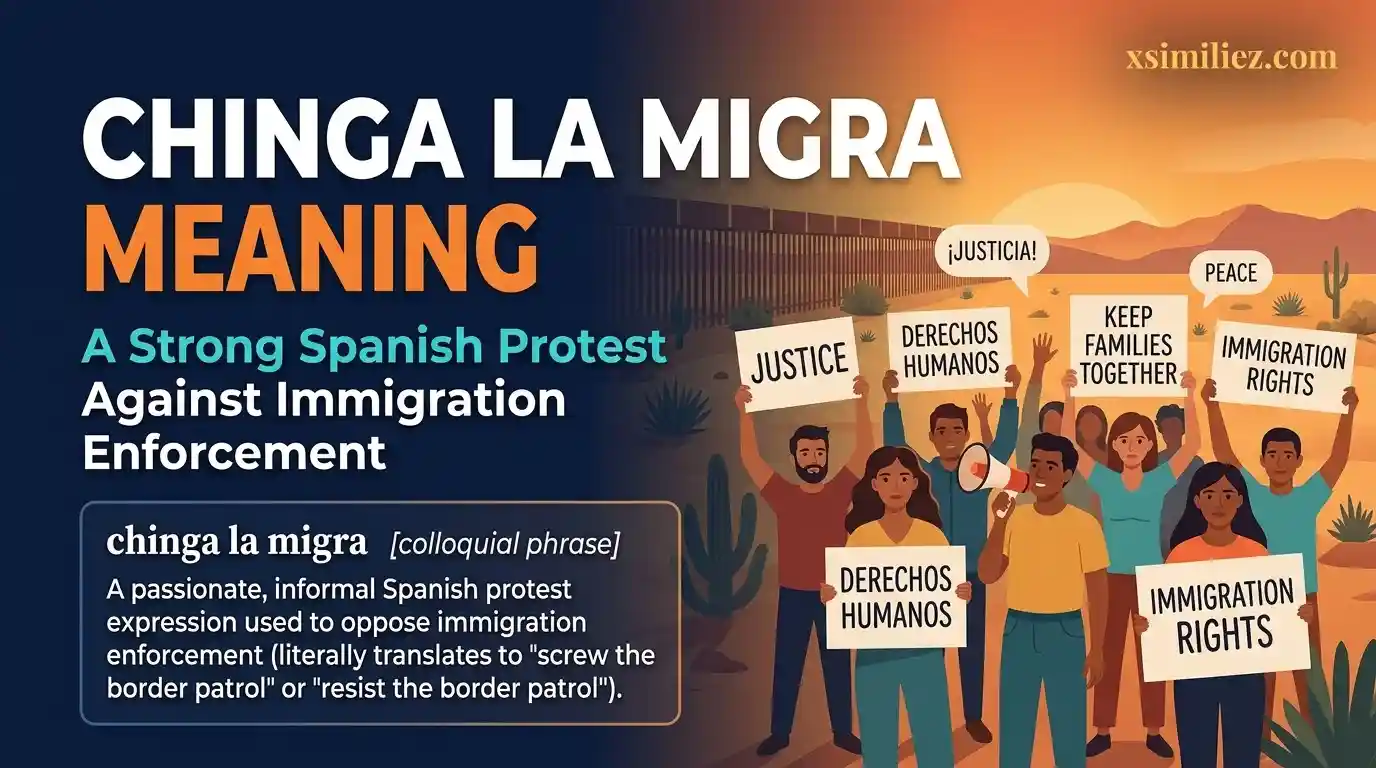
Chinga la migra meaning, in simple words: it is a rude Spanish phrase that means “f*** the immigration agents.” “La migra” is slang for Border Patrol, ICE, and other immigration officers. People shout it at protests, spray it on walls, and sing it in songs.
You may have seen it on a sign or heard it in a video and wondered what it really meant. Was it a joke? A threat? Pure anger? The truth is a little deeper than three words suggest.
In this guide, you will learn what each word means, where the phrase comes from, how people use it today, and how to talk about it with care. We will also clear up some common mistakes along the way.
Quick Answer: Chinga la Migra Meaning in Plain English
The chinga la migra meaning is “f*** the migra.” A softer way to say it is “screw the immigration police.” It is a strong protest phrase. It shows anger at immigration enforcement, such as raids, arrests, and deportations.
The phrase is profane. That means it uses a curse word. Most Spanish speakers know right away that it is not polite language. It is the kind of thing a person shouts at a rally, not the kind of thing a person says to a teacher or a boss.
Immigrants are not the target. The words are aimed at the officers and the system that enforce immigration laws.” The sentence after it, “Whether you agree with the message or not…”, is unchanged.
Word-by-Word Breakdown of Chinga la Migra
Breaking the phrase into parts makes it much easier to understand. There are only three words, but each one carries weight.
| Word | Language | Basic Meaning | Notes |
| Chinga | Spanish (Mexican slang) | A command form of “chingar,” a very strong curse verb | Closest English match is the F-word |
| La | Spanish | “The” | Used for feminine nouns |
| Migra | Spanish slang | Short for “inmigración,” meaning immigration officers | Can mean Border Patrol, ICE, or Mexican immigration agents |
Put them together and you get a command: “F*** the immigration agents.” That is the literal sense. The feeling behind it is closer to “I reject this system” or “I am angry and I am not afraid to say so.”
The verb “chingar” is one of the most flexible curse words in Mexican Spanish. The Mexican writer Octavio Paz wrote about it in his famous book The Labyrinth of Solitude. He showed that the word can mean many things, from harm and force to bad luck. In this phrase, it works like the English F-word used as a protest.
What Does “La Migra” Mean?
Many readers search for this phrase because they already know “chinga” is a curse word but do not know what “migra” means. It is short for “inmigración.” In everyday speech, la migra means immigration officers. That usually includes Border Patrol agents and Immigration and Customs Enforcement, often called ICE.
The word is slang, so it carries a feeling. Some people say it with fear or anger. Others say it in a flat, everyday way, like saying “the cops” In many families, “la migra” is a word that makes people go quiet, because it can mean a raid at work or a knock at the door.
Here is a key point. La migra points to the officers and the agency, not to migrants. The word for a person who moves to a new country is “migrante” or “inmigrante.” Mixing these up is one of the most common mistakes people make.
In Mexico, “la migra” can also mean Mexican immigration officers. Mexico has its own immigration agency, and people there use the same slang for it. So the meaning depends on where the speaker lives and what officers they are talking about.
Grammar and Correct Usage of Chinga la Migra
The grammar is simple. “Chinga” is a command, also called an imperative. It tells someone to do something. In this case, it is like saying “f*** the migra,” the same way English speakers say “f*** the police.”
Because it is a command, the phrase is usually shouted or chanted. It is rarely used in a calm sentence. You would not normally say, “Yesterday I told my friend chinga la migra.” People use it as an outburst, a slogan, or a lyric.
Spanish speakers can change the phrase to make it stronger or softer. Here is how related phrases compare:
| Phrase | Rough Meaning | Strength |
| Abajo la migra | Down with the migra | Milder, still political |
| Fuera la migra | Migra out | Milder, common at rallies |
| No más redadas | No more raids | Polite and direct |
| Chinga la migra | F*** the migra | Very strong and profane |
This table shows that the phrase sits at the top of the anger scale. People who want to make the same point with less heat often choose the phrases above it.
One more grammar tip: do not add extra words and expect the same effect. “Chinga a la migra” is sometimes heard too, with the small word “a,” and it means the same thing. Spoken slang often drops or adds little words like this.
Origin and History of Chinga la Migra
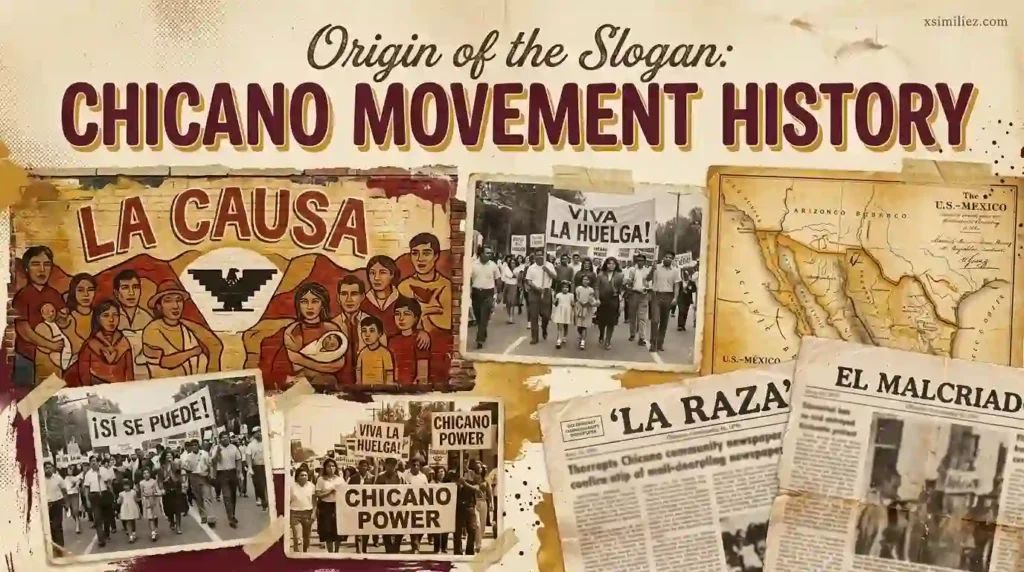
Here is where honesty matters. No one can point to the exact day or person who first said “chinga la migra.” Slang phrases often grow out of crowds, music, and street talk, and they leave no clear paper trail. So any article that names one inventor should be treated with caution.
What we can say is based on solid history. The word “migra” has been used for many decades in Mexican and Mexican American communities. It grew out of long years of border crossing, farm work, and immigration enforcement along the U.S.-Mexico border. Programs and campaigns, including a large deportation effort in 1954, left deep memories in many families.
The Chicano movement of the 1960s and 1970s also shaped how people talked about power, police, and rights. Protest language became bolder. Slogans mixing English and Spanish, called code-switching, became part of art, murals, poems, and music.
Since then, anti-authority phrases like this one have shown up in punk, hip-hop, and regional Mexican music, as well as on protest signs. The phrase is part of a wider tradition of using blunt, angry words to speak out against enforcement and fear. We cannot say exactly when it started, but we can say it grew from real experiences in real communities.
Why People Say It: The Feelings Behind the Phrase
Words alone do not explain why a phrase spreads. The feelings behind it do. People who shout “chinga la migra” are often expressing fear, anger, grief, or a wish to feel strong.
For some, it comes from personal stories. A parent was detained. A neighbor disappeared. A family was split up. When a person has lived through that, a polite phrase can feel too small. A curse word can feel like the right size for the pain.
For others, it is about protest and community. Chanting together in a crowd can feel powerful. The phrase is short, loud, and easy to remember, so it works well in a group.
Not everyone feels the same way. Some people see immigration officers as public servants who enforce laws passed by elected leaders. They may find the phrase disrespectful or hurtful, especially to officers who say they are just doing their jobs. Some immigrants and Spanish speakers also dislike the phrase because they find it too crude or think it hurts the cause.
Both views exist, and a fair reader can understand each one. The phrase is political speech, and political speech often divides people.
Real-Life Examples of Chinga la Migra
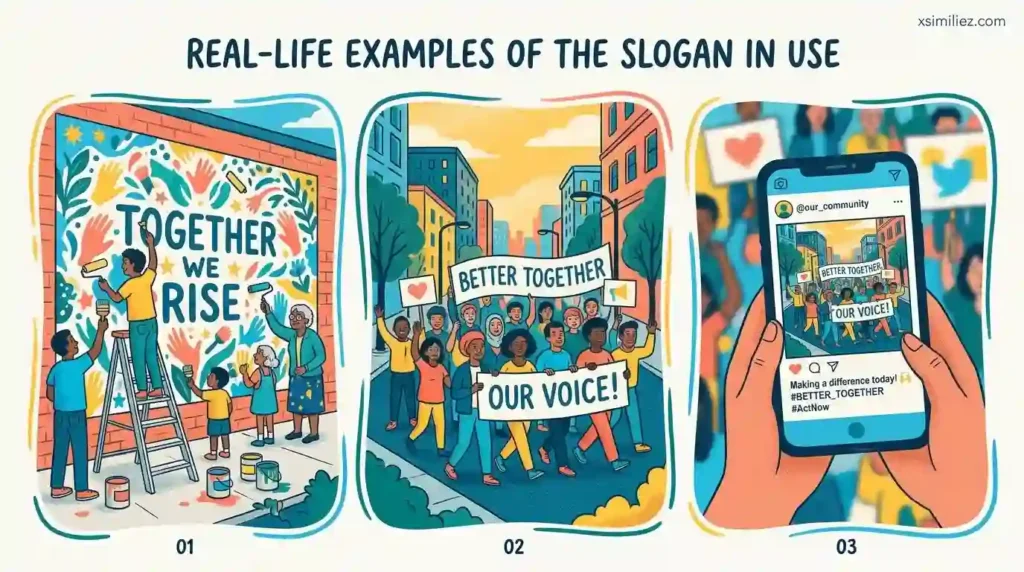
Seeing the phrase in context helps you understand how it works. Here are common places and situations where people use it.
| Where You Might See or Hear It | What It Usually Means There |
| Protest chants | A group shows anger at raids or deportations |
| Street art and murals | An artist makes a political statement |
| Song lyrics | A musician speaks about border life and fear |
| Social media posts | A person shares frustration or joins a trend |
| Handmade signs | A marcher adds a bold, short message |
Here are a few simple sentences that show how people might talk about the phrase:
- “I saw a sign that said chinga la migra, and I looked up what it meant.”
- “The crowd chanted it after news of the raid.”
- “My cousin says the phrase is too harsh, but my friend says it shows how people feel.”
Notice that these examples do not repeat the phrase as a casual greeting or joke. That is on purpose. In real life, the phrase almost always shows up in charged moments, not relaxed ones.
Current Usage and Trends
Today, the phrase appears most often when immigration is in the news. When there are big raids, new enforcement rules, or high-profile arrests, protest language tends to rise. Videos of rallies and marches spread fast on social media, and short slogans travel the fastest.
Younger people also use the phrase in music, memes, and online posts. Sometimes it is used seriously. Sometimes it is used in a more playful or ironic way. Because tone is hard to read online, this can cause confusion. The same words can mean real anger in one post and edgy humor in another.
In the United States, speech like this is generally protected by the First Amendment. That means people can usually say harsh things about the government without being punished for the words alone. There are limits, though. Direct threats and calls for violence are not protected. Saying a political slogan at a rally is very different from threatening a specific person.
Workplaces, schools, and private businesses can still set their own rules. A person might have the right to say something in public and still face consequences at a job or in a classroom. If you are unsure, it is smart to ask about the rules where you are.
Common Mistakes People Make With Chinga la Migra
A few errors come up again and again. Knowing them can save you from embarrassment and confusion.
Thinking it means “f* immigrants.”** This is the biggest mistake. “Migra” means the officers and the agency, not the people who immigrate. The word for those people is “migrantes” or “inmigrantes.”
Translating it too softly. Some people try to translate it as “down with immigration” or “I don’t like immigration.” That misses the heat. The phrase is a curse, and a good translation should show that.
Using it as a casual joke. Because it is profane and political, it can hurt or upset people. Some listeners have lived through raids or deportations. Others have family in law enforcement. Tossing it around without thinking can land badly.
Assuming it means the same thing everywhere. Spanish changes from country to country. “Chingar” is very common in Mexican Spanish, but it may sound different or less familiar in other places. In Spain, for example, people often use other curse words for the same purpose.
Forgetting about tone. The same words can sound like a protest chant, a song lyric, or an insult depending on who says them and how. Reading the situation matters as much as reading the words.
Tips for Understanding and Handling Chinga la Migra Wisely
If you come across this phrase, a little care goes a long way. Here are some practical ideas.
First, look at the setting. Is it a rally, a song, a mural, or a text message? The setting tells you a lot about the speaker’s goal. A protest chant is usually about group anger. A lyric might be about a story or a mood.
Second, separate the words from the person. If someone you know uses the phrase, ask what they mean by it. Many people have a personal story behind their anger. Listening is often more helpful than arguing.
Third, keep your own language fitting for the place. If you are a student, a worker, or a teacher, remember that strong curse words can cause problems in formal spaces. If you want to make a similar point more politely, you can say “I disagree with immigration raids” or “I want a fair immigration system.”
Fourth, if you are learning Spanish, learn the phrase as a piece of culture, not as everyday vocabulary. It is good to recognize it. It is usually not a good idea to use it casually.
Finally, check reliable sources. Dictionaries such as the Real Academia Española can help with word meanings. For history and rights, look to trusted libraries, universities, and civil rights groups instead of random social posts.
FAQs
What does chinga la migra mean in English?
It means “f*** the immigration agents.” A milder version is “screw the immigration police.” It is a rude protest phrase that shows anger toward immigration enforcement.
Is chinga la migra a bad word?
Yes, it contains a strong curse word. “Chinga” is very vulgar in Spanish. Many people will see the phrase as offensive, so it is not suitable for polite or formal settings.
What does “la migra” mean?
“La migra” is Spanish slang for immigration officers. It can mean Border Patrol, ICE, or even Mexican immigration agents, depending on where the speaker lives and what they are talking about.
Does chinga la migra mean the same as anti-immigrant language?
No. It is the opposite in most cases. It targets immigration enforcement, not immigrants. People who say it are usually upset about raids, arrests, or deportations.
Is it legal to say chinga la migra in the United States?
In most cases, yes. Political speech, even harsh speech, is generally protected by the First Amendment. Threats and calls for violence are not protected, and private places like workplaces or schools may have their own rules.
Where did chinga la migra come from?
No one knows who said it first. It grew out of Mexican and Mexican American communities and protest culture over many years. Reliable sources do not name one clear inventor or date.
Conclusion
The chinga la migra meaning is easy to state and harder to fully understand. It means “f*** the immigration agents,” and it is a rude, strong protest phrase. It points at officers and enforcement, not at immigrants as people.
Behind those three words are real feelings: fear, anger, grief, and a wish to be heard. Some people see the phrase as a powerful form of protest. Others find it harsh or disrespectful. Both reactions are part of the story.
If you meet this phrase, take a moment to read the setting and the speaker’s intent. Use it, if at all, with care, and choose gentler words when you are in school, at work, or in any formal place. Understanding what a phrase really says helps you talk about it fairly.

Hi, I’m Harper Blake, and I write for Xsimiliez.com. I enjoy sharing clear and friendly simile examples that students and beginners can understand easily. My goal is to make English learning simple and enjoyable.