The spiritual meaning of smelling smoke when there is none often points to a message, a warning, or a spirit nearby. Many people believe it is a sign to pay attention. Others link it to a loved one who has passed on. Either way, it can feel strange and a little scary.
You are not alone. Thousands of people search for this every month. They wake up, or sit at home, and smell something burning. Nothing is on fire. No one is smoking. So they start to wonder what it means.
In this guide, you will learn the spiritual ideas behind the smell and how different beliefs explain it. You will also learn how to tell a spiritual sign from a health issue. At the end, you will get simple steps for what to do next.
Quick Answer: What Is the Spiritual Meaning of Smelling Smoke When There Is None?
In spiritual circles, smelling smoke with no source is often seen as a sign from the unseen world. People say it can mean a spirit is close, a loved one is saying hello, or your inner voice is warning you. Some also see it as a call to let go of the old and start fresh.
The three most common readings are simple. First, it may be a visit or message from someone who has died. Second, it may be a warning from your intuition. Third, it may be a sign of cleansing, change, or spiritual growth.
Here is the most important part, though. Always rule out a real fire and common health causes first. A smell that seems spiritual can also come from your nose, your sinuses, or your brain. Safety comes before symbolism.
The Meaning of Smelling Smoke When There Is None, Explained
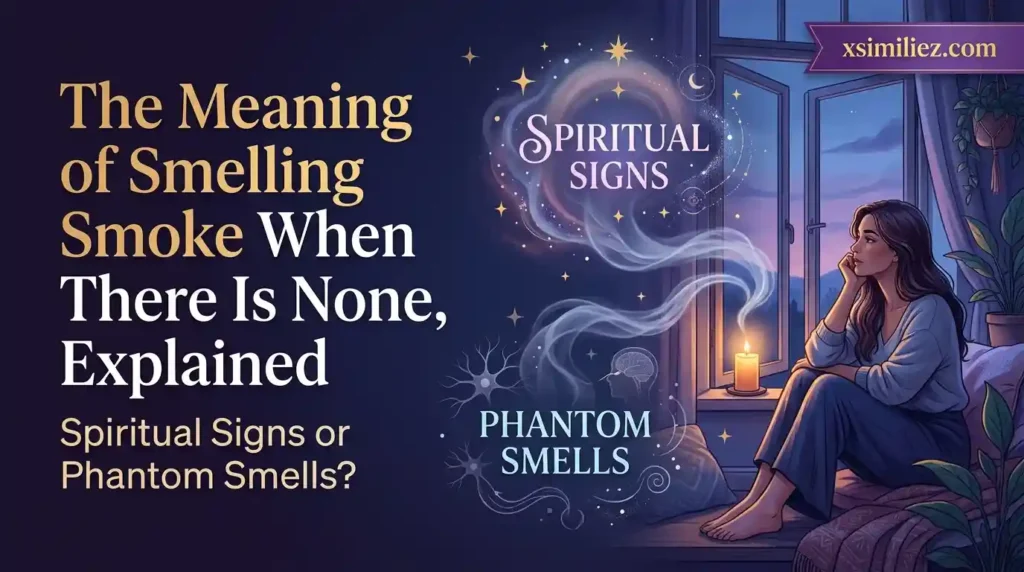
When you smell something that is not really there, doctors call it a phantom smell. The medical word is phantosmia. The scent people report most often is smoke or something burning. It can last a few seconds, or it can come and go for days.
In spiritual language, the same experience has a different name. Many people call it clairalience. That word means “clear smelling.” It is the belief that spirit can send messages through scent instead of through sight or sound. You may hear it described as one of the “clair” senses, along with clairvoyance, which is clear seeing, and clairaudience, which is clear hearing.
It helps to be honest about one thing. Science has not proven that spirits send smells. Clairalience is a belief, not a tested fact. But belief matters to many people, and it can bring comfort or guidance. So this article looks at both sides: what people in spiritual traditions say, and what doctors say.
Why smoke? Many believers say smoke feels like a strong, hard-to-ignore signal. You cannot easily brush it off. It grabs your attention fast. And since smoke has long been tied to prayer, fire, and change, it fits well with big spiritual themes.
Common Spiritual Meanings People Link to Phantom Smoke
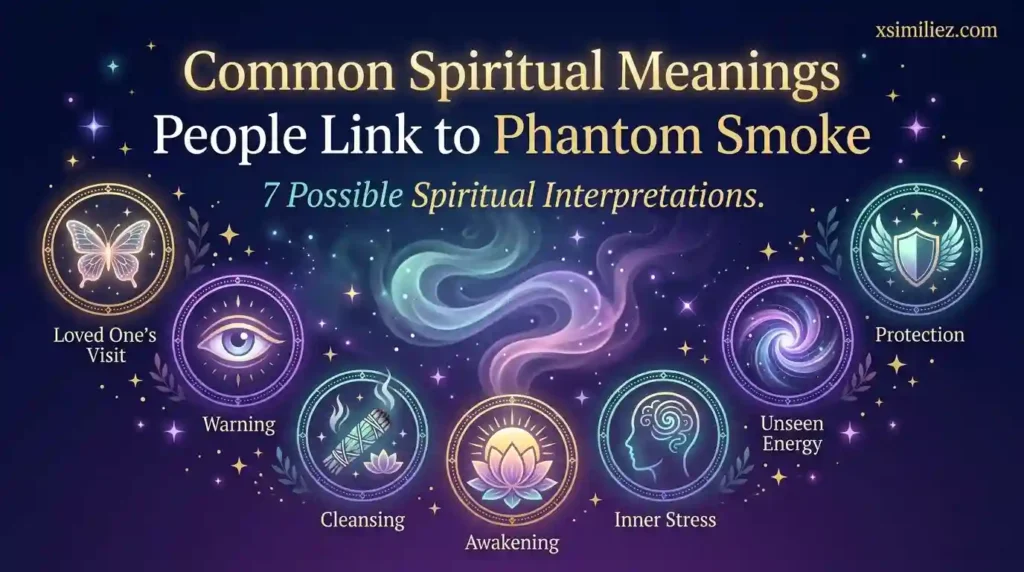
No single answer fits everyone. The meaning often depends on your life, your beliefs, and when the smell shows up. Still, a few ideas come up again and again.
The first idea is a visit from a loved one. If your grandfather smoked a pipe, or your mother always burned wood in the fireplace, the smell may feel like a hello from them. People often say the scent arrives during a quiet moment, or on a birthday or anniversary. It can feel warm and familiar instead of scary.
The second idea is a warning. Some believe a sudden smell of smoke is your intuition waving a flag. It may be telling you to slow down, check on a person, or avoid a risky choice. In this view, “smoke” stands for danger that you cannot fully see yet.
The third idea is cleansing and change. Fire burns away the old. So smoke can stand for a season of life ending and a new one starting. People who smell smoke during a breakup, a move, a job change, or a time of grief sometimes feel it is a sign to release what no longer fits.
The fourth idea is spiritual awakening. Some say that as a person grows more aware and more sensitive, new senses open up. Smelling smoke may be one of those early signs. Others say it is only a sign that you are tired, stressed, and paying closer attention to everything.
The fifth idea is unspoken anger or stress. Smoke can stand for heat, as in “burning” anger or burnout. Here, the smell may be a nudge to look at feelings you have been holding in.
The sixth idea is the presence of unseen energy. Some people believe smoke smells show up in places where something strong happened long ago. They may notice it only in one room or one building. This idea is common in folklore, but there is no solid proof for it.
The last idea is protection. A few believers say the smell means a guide or guardian is near. They say it is a way of saying, “You are not alone.”
The table below sums up these ideas in a simple way.
| Spiritual Reading | What It May Mean | Clues Often Mentioned |
| Visit from a loved one | A message of love or comfort | Smell matches a person who has passed |
| Warning | Your intuition says “be careful” | Smell comes before a big choice |
| Cleansing or change | A chapter is ending | Smell appears during a life shift |
| Awakening | Your awareness is growing | Other signs of sensitivity appear |
| Inner anger or stress | Feelings need attention | Smell shows up with tension or burnout |
| Unseen energy | A place holds a strong past | Smell appears only in one spot |
| Protection | A guide is near | Smell feels calm, not scary |
How Different Beliefs View Smoke and Sacred Fire
Smoke has a special place in many faiths. That may be one reason the idea of “spiritual smoke” feels so natural to people. It helps to look at how smoke is used, since that shapes how some people read a phantom smell.
In many Indigenous traditions in North America, burning herbs such as sage or sweetgrass is a way to cleanse a space and say a prayer. This practice is often called smudging. Its meaning belongs to those communities, so it is best to learn about it with respect.
In Hinduism and Buddhism, incense is a common part of worship and meditation. The rising smoke is seen as a way to honor the divine and calm the mind. In Judaism and Christianity, incense appears in the Bible and in many church services. The Bible also compares prayer to incense that rises up. And in the story of Mount Sinai, the mountain is described as covered in smoke when God came down.
Because of these old links, many people feel smoke is tied to prayer, holiness, and the meeting place between earth and heaven. So when they smell it unexpectedly, they ask if something sacred is near.
One caution is needed here. These traditions use real smoke on purpose. They do not teach that a phantom smoke smell always means a message. That reading is a modern, personal one, and it differs from person to person. Some religious leaders may also say that not every unusual experience is a sign from God or spirit. Many advise using wisdom and checking other causes first.
A Short Look at Where This Idea Comes From
The link between smoke and the spirit world is very old. Smoke rising from fires, altars, and offerings shows up in the writings and rituals of many ancient peoples. It was a visible way to picture a prayer moving upward.
The idea that a ghostly smoke smell is a sign is harder to trace. There is no one ancient text that I can point to that names it clearly. Instead, it seems to come from a mix of folklore, family stories, and modern spiritual writing. Many people also share stories online, which has made the idea more popular.
So if you read that this belief is thousands of years old, be careful. The symbol of smoke is ancient. The specific reading of a phantom smoke smell is mostly modern and based on personal experience.
Rule Out the Real World First: Safety and Health Causes
Before you decide the smell is spiritual, take a few steps. This part matters most.
Start with safety. Walk through your home. Check the stove, oven, heaters, plugs, and the laundry room. Test your smoke alarms. Look outside, too, since a neighbor’s fire, a wildfire far away, or a burning trash pile can carry smoke a long way. In places with seasonal crop or garden burning, smoke can drift into homes without warning. If you truly smell smoke and see or feel any danger, leave and call emergency services.
Also know this: carbon monoxide has no smell. A smoke smell does not mean carbon monoxide is present, and a lack of smell does not mean you are safe. A working carbon monoxide alarm is the only good way to know.
Next, think about your body. Phantosmia is more common than most people expect. Doctors say it can happen after a cold or sinus infection, with allergies, or with nasal polyps. It can follow a head injury. It is also linked to migraines, and in some cases to seizures. Some people notice smell changes after a virus such as COVID-19. Stress and lack of sleep may play a part, too. In rare cases, ongoing phantom smells can be tied to a problem in the brain, which is why they should not be ignored.
So when should you see a doctor? Make an appointment if the smell keeps coming back, lasts for days, or bothers your daily life. Get help right away if it comes with a sudden headache, weakness, confusion, trouble speaking, vision changes, or a seizure. A doctor can check your nose, sinuses, and nerves and help find the cause.
The table below shows how a spiritual reading and a healthy reading may differ. It is a rough guide, not a diagnosis.
| Clue | May Lean Spiritual | May Lean Medical |
| Timing | Shows up at meaningful moments | Comes at random or all day |
| Feeling | Calm, comforting, or meaningful | Unpleasant, harsh, or sickening |
| Place | Appears in one special spot | Follows you everywhere |
| Other signs | Dreams, hunches, strong emotions | Stuffy nose, headaches, dizziness |
| Length | Short and fades quickly | Lasts days or keeps returning |
Notice that a health cause does not cancel a spiritual meaning for you. Some people hold both views. They get medical care and also reflect on what the experience means in their life. That balanced path is a healthy one.
Common Mistakes People Make When Smelling Smoke With No Source
The first mistake is skipping safety checks. A spiritual explanation feels exciting, so some people jump to it fast. But a real fire is always the first thing to rule out.
The second mistake is treating every case as a bad omen. Many people panic and think a smoke smell means doom or death. Most spiritual views do not say this. Smoke often stands for change, cleansing, or love, not only danger.
The third mistake is ignoring your health. If the smell keeps coming back, waiting too long can delay care. Phantom smells are often harmless, but they are worth checking.
The fourth mistake is reading too much into one moment. If you smelled smoke once while cooking dinner, it may only be a lingering scent in your nose. Looking for patterns over time is wiser than judging a single event.
The fifth mistake is letting fear take over. Some people begin to expect the smell and feel anxious when it shows up. That worry can make the experience stronger. Calm breathing and a steady routine often help.
The sixth mistake is trusting anyone who claims to know your answer for sure. Be careful with people who say they can read the smell for a fee or tell you that something terrible will happen. A kind, honest guide will help you think, not scare you.
Real-Life Examples of Smelling Smoke With No Source
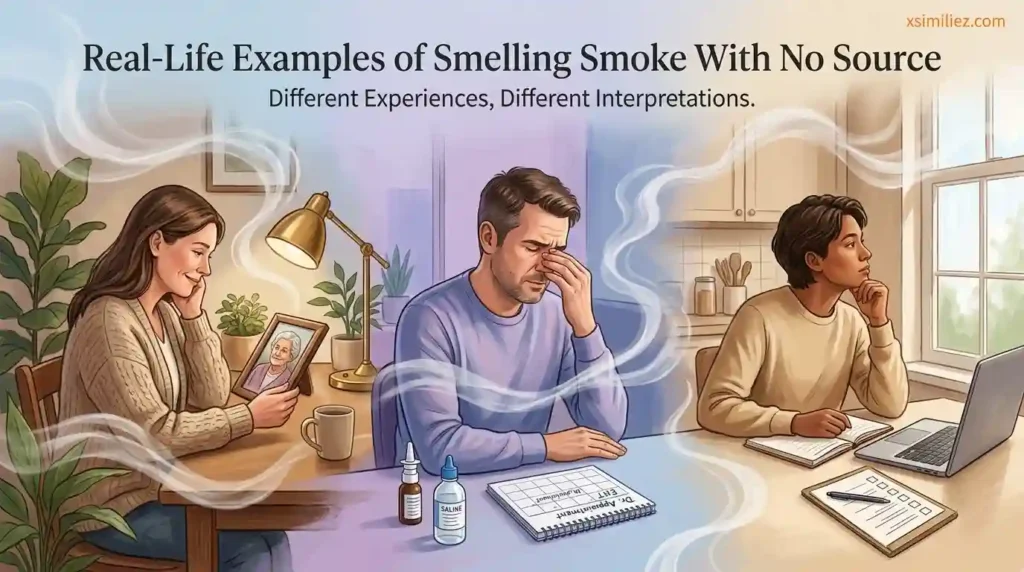
The stories below are common kinds of experiences that people describe. They are examples, not proof of anything, but they show how the meaning can change.
Imagine a woman who loses her father, a longtime pipe smoker. A week after the funeral, she sits alone in her kitchen and smells sweet pipe smoke for about a minute. No one is home. She feels calm and teary, and she takes it as his goodbye. For her, the meaning is comfort. She also checks the house, just to be safe, and finds nothing.
Now picture a man who smells smoke each morning for several days. The smell is sharp and unpleasant. He also has a stuffy nose and pressure in his face. Nothing about it feels like a message. His doctor finds a sinus infection. After treatment, the smell goes away. His case is a good reminder that the body is often the answer.
Here is a third example. A young woman is about to sign a lease with a new roommate. As she walks into the apartment, she suddenly smells smoke. There is none. She feels uneasy and, after thinking it over, decides to wait. Later she learns of problems with the building. Was it intuition or luck? No one can say for sure. But for her, it became a reason to slow down and look closer.
All three people had the same kind of experience, but each one found a different meaning. That is why gentle curiosity works better than quick answers.
Tips to Understand and Respond to the Smell
Here are simple steps you can follow the next time it happens.
Stay calm and check for a real fire first. Look, listen, and test your alarms. This takes only a minute and gives you peace of mind.
Write it down. Keep a small notebook or a note on your phone. Record the date, time, place, how strong the smell was, and how you felt. Add what was going on in your life that day. After a few weeks, patterns may show up, and these notes will also help a doctor if you decide to book a visit.
Pay attention to your thoughts. Ask yourself what you were thinking about when the smell began. Were you missing someone? Worried about a decision? Feeling stressed? Often, the meaning is tied to what is already on your heart.
Try grounding. Take slow breaths, feel your feet on the floor, and drink some water. If you have a faith practice, a short prayer or quiet meditation can help you feel steady. Many people find that saying a kind “thank you” or “I hear you” brings peace if they believe a loved one is near.
Be careful with burning herbs or incense. If you want to cleanse your home, open a window, use a safe holder, and never leave flames alone. Smoke from burning can bother your lungs, especially if you have asthma. A simple alternative is to clean your space, let in fresh air and sunlight, and say a calming word or prayer.
Talk to someone you trust. A friend, family member, or faith leader can listen without judging. Sharing the story often takes away some fear.
Finally, see a doctor if the smell is frequent or comes with other symptoms. Taking care of your body is not a lack of faith. It is wise, and it can make room for clearer reflection.
FAQs:
Is smelling smoke a sign from a loved one who has died?
Many people believe it can be, especially if the smell matches something that person used, such as a pipe, a cigar, or a wood stove. Some feel comfort from this view. Science has not proven it, so it remains a personal belief. If it brings you peace, you can hold it gently while also staying careful about safety and health.
Is smelling smoke a bad omen?
Not necessarily. Some people see it as a warning, but many others read it as a sign of change, cleansing, or love. Fear is not the best guide. Look at the feeling that came with the smell and what was happening in your life, and do not assume something bad will follow.
What is clear?
Clairalience means “clear smelling.” It is a spiritual term for the belief that a person can sense spirit through smells that have no physical source. People who use this word often say they smell flowers, perfume, smoke, or other scents. It is a belief and not a medical diagnosis.
Can smelling smoke be a medical problem?
Yes. This is called phantosmia, or a phantom smell. It can come from sinus problems, colds, allergies, migraines, head injuries, and sometimes seizures or other brain issues. If the smell keeps coming back or you have other symptoms, it is best to see a doctor.
What should I do right after I smell smoke with no source?
First, check your home and test your smoke alarms. If you see or feel danger, get out and call emergency services. If everything is fine, take a few slow breaths, note the time and place, and think about how you feel. You can then decide If it needs more reflection or a doctor’s visit.
Why do I smell smoke at night or when I wake up?
There are a few possible reasons. Dry air, sinus swelling, or allergies can change how your nose works while you sleep. Stress and poor rest can also play a part. Some people feel night is a quiet time when spiritual signs are easier to notice. If it happens often, talk to a doctor to rule out health causes.
Conclusion
The spiritual meaning of smelling smoke when there is none can be a message of love, a warning, or a sign of change. Different people find different answers. What matters is how it speaks to you and how you respond with care.
Safety always comes first. Check for fire, test your alarms, and think about your health. If the smell keeps returning or comes with other symptoms, see a doctor. A spiritual view and a medical view can live side by side, and you do not have to pick only one.
Finally, stay calm and curious. Write down what you notice, talk to someone you trust, and let the meaning grow over time. If it brings you comfort, welcome it. If it worries you, get help. Either way, you are paying attention, and that is a wise place to begin.

Hi, I’m Mason Avery, a content writer at Xsimiliez.com. I like writing about similes, figurative language, and creative expressions. I believe learning English becomes easier when examples feel natural and relatable.