Have you ever heard someone say “pinche” in a conversation, a song, or a TV show and wondered what it means? You are not alone. Many people search for pinche meaning because this word shows up a lot in everyday Spanish, especially in Mexico and other Latin American countries.
The short answer is that “pinche” is a word with two very different meanings. It can be a mild curse word used like “damn” or “freaking” in English. It can also be a normal job title for a kitchen helper. The meaning depends on how and where the word is used.
In this article, you will learn what “pinche” really means, how people use it in real life, where it came from, and how to avoid mixing it up in the wrong situation. By the end, you will understand this word clearly and confidently.
Quick Answer: Pinche Meaning
“Pinche” is a Spanish slang word that mostly means “damn,” “freaking,” or “annoying” when used as an insult or intensifier.. In a kitchen setting, “pinche” instead means a cook’s helper or assistant chef. The word is very common in Mexican Spanish, and its tone changes a lot depending on the situation, the speaker’s tone of voice, and who is listening.
This double meaning often confuses people who are new to Spanish. That is completely normal. Even native speakers sometimes laugh about how one small word can mean something rude in one sentence and something totally harmless in another.
Meaning or Definition of Pinche
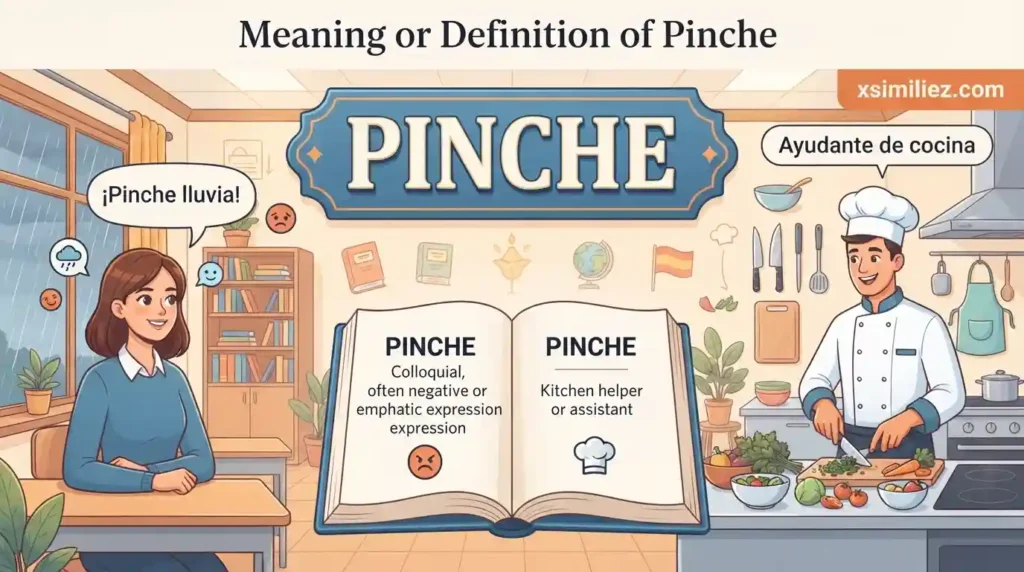
The word “pinche” mainly works as an adjective in casual Spanish. People use it to make a sentence sound more emotional, annoyed, or funny. It is similar to how English speakers use words like “damn,” “darn,” or “freaking” to add feeling to a sentence without being extremely offensive.
For example, someone might say “pinche tráfico” to mean “this darn traffic.” They are not attacking anyone. They are just showing frustration. This is the most common way “pinche” is used in daily conversations across Mexico, parts of Central America, and among Spanish speakers in the United States.
At the same time, “pinche” can be used as a noun to describe a job. In restaurants and professional kitchens, a “pinche” is a kitchen assistant. This person helps the main chef by cutting vegetables, cleaning tools, and preparing simple ingredients. This meaning is completely formal and has nothing to do with cursing.
Here is a simple table to show the difference clearly.
| Type of Use | Meaning | Example Sentence | Tone |
| Slang adjective | Damn, freaking, foolish | “Pinche lluvia ” (Darn rain ) | Casual, mildly rude |
| Job title (noun) | Kitchen helper or assistant cook | “Trabaja de pinche en un restaurante.” | Neutral, professional |
| Insult toward a person | Jerk, idiot (stronger) | “Es un pinche mentiroso.” | Rude, offensive |
Understanding which version is being used depends heavily on context, which we will explore more in the next sections.
Grammar or Correct Usage of Pinche
In Spanish grammar, “pinche” usually comes before the noun it describes, just like most adjectives that show emotion or opinion. For example, “pinche carro” means “this damn car,” and it usually shows annoyance about the car, not a neutral description of it.
When “pinche” is used as a job title, it follows normal noun rules. You might see “el pinche” for a male kitchen helper or “la pinche” for a female one, though in modern kitchens, many people simply use “pinche” for anyone in that role, regardless of gender.
One important grammar note is that “pinche” does not change much based on gender when used as slang. Native speakers almost always say “pinche” no matter if the noun after it is masculine or feminine. This is different from many other Spanish adjectives, which usually have to match gender.
Here are a few more real usage patterns:
- “Pinche” + noun = a frustrated or humorous emphasis
- “Pinche” + person’s name or pronoun = a stronger insult
- “de pinche” = working as a kitchen assistant
Because the emotional meaning depends so much on tone and setting, learners should listen closely to how native speakers say it before trying to use it themselves.
Origin or History of Pinche
The origin of “pinche” as a kitchen term comes from old Spanish and French culinary traditions, where kitchen helpers held specific ranks. Historically, a “pinche de cocina” was one of the lowest positions in a professional kitchen, often responsible for basic prep work under the supervision of a head chef.
Over time, especially in Mexico, the word slowly shifted into everyday slang. Language experts believe this happened because kitchen helpers were often seen as low-ranking or unimportant workers. This idea of “low value” or “less important” may have influenced how people began using “pinche” as a way to express annoyance or dismiss something as unworthy of respect.
While there is no single confirmed reason for this shift, this connection between the job meaning and the slang meaning is widely accepted among linguists who study Mexican Spanish. Today, both meanings still exist side by side, showing how language naturally evolves over generations.
Common Mistakes with Pinche
Many English speakers learning Spanish make mistakes when trying to use “pinche” for the first time. Since the word can range from mildly rude to genuinely offensive, understanding these common errors can help you avoid awkward or embarrassing situations.
One common mistake is assuming “pinche” is always extremely offensive. In many casual settings among friends or family, it is closer to “darn” or “freaking” than a serious curse word. Overreacting to hearing it can make you seem overly sensitive in a culture where the word is used casually every day.
Another mistake is using “pinche” directly toward a person you do not know well. While “pinche tráfico” is harmless, saying “pinche” directly about a person, especially a stranger, boss, or elder, can come across as disrespectful or even aggressive. Context and relationship matter a lot here.
A third mistake is confusing “pinche” with similar-sounding words. Some learners mix it up with “pincho,” which refers to a small skewer or appetizer in Spanish cuisine, especially in Spain. These two words look similar but have completely different meanings and uses.
Real-Life Examples of Pinche
Seeing real examples can help make the meaning much clearer. Below are common situations where you might hear or read “pinche” in everyday Spanish conversations.
- “Pinche calor This damn heat ” (complaining about hot weather)
- “No encuentro mis pinches llaves.” “I can’t find my darn keys.”
- “Trabajó como pinche antes de ser chef.” “He worked as a kitchen assistant before becoming a chef.”
- “Es un pinche flojo.He ‘sa lazy jerk.” (stronger insult)
- “Pinche examen tan difícil.This darn test is so hard.”
Notice how the same word can describe weather, lost keys, a job, or a person, yet the emotional weight shifts completely based on what follows it. This flexibility is part of why “pinche” is so widely used in casual Mexican Spanish.
Current Usage or Trends
Today, “pinche” remains extremely common in everyday speech, especially among younger speakers, in memes, social media captions, and casual conversations. It has also become more visible in music, movies, and Spanish-language content aimed at U.S. audiences, since many bilingual speakers grow up hearing it regularly.
In the United States, especially in communities with strong Mexican-American populations, “pinche” is often used in a playful or humorous way among friends. It has crossed into some English-Spanish mixed conversations, sometimes called “Spanglish,” where people blend both languages naturally.
Despite its casual popularity, “pinche” is still generally avoided in formal writing, professional settings, or official documents unless someone is specifically referring to the kitchen job title. Understanding this balance between casual slang and formal language is key to using the word appropriately.
Tips or Best Practices for Using Pinche
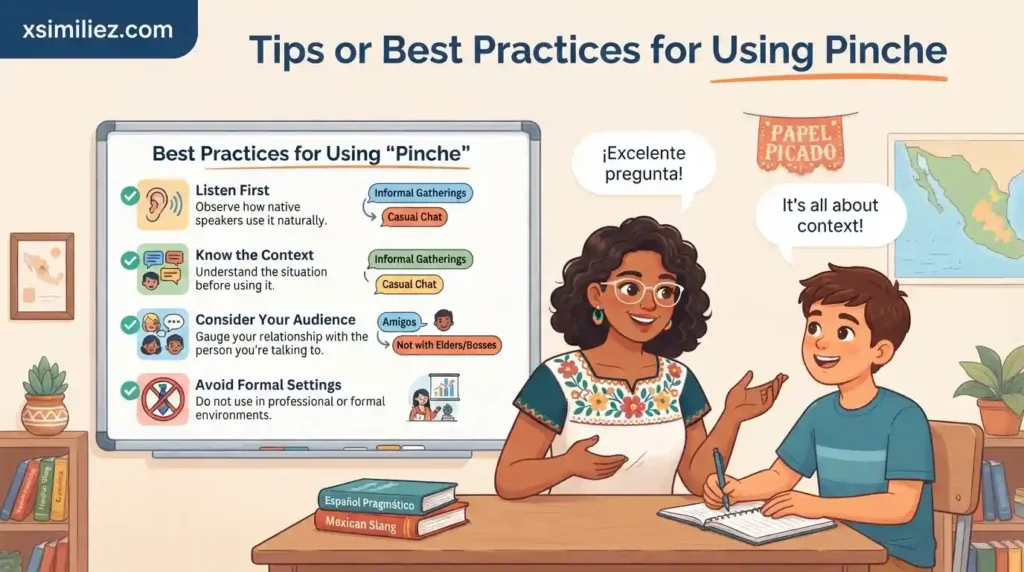
If you are learning Spanish and want to understand or use “pinche” correctly, keep these practical tips in mind.
First, listen before you speak. Since tone and context change the meaning so much, it helps to hear how native speakers use the word in different situations before trying it yourself.
Second, avoid using it in professional or formal settings unless referring to the kitchen job. Using slang “pinche” at work, in school papers, or with people you just met can come across as inappropriate.
Third, remember that regional differences exist. While extremely common in Mexico, the word may be used less often or understood differently in Spain, Argentina, or other Spanish-speaking countries. Always consider your audience.
Here is a simple comparison table to help you decide when it’s appropriate to use “pinche.”
| Situation | Appropriate to Use? | Reason |
| Talking with close friends casually | Yes | Common, low-risk slang use |
| Describing a kitchen job title | Yes | Neutral, professional meaning |
| Formal writing or business emails | No | Considered too casual or rude |
| Speaking to someone you just met | Use with caution | Could be seen as disrespectful |
| Talking to elders or authority figures | No | Seen as impolite in most cases |
FAQs
Is “pinche” a bad word in Spanish?
It can be mildly rude, similar to “damn” or “freaking” in English. It is not usually considered a severe curse word, but it should still be used carefully depending on the audience.
What does “pinche” mean in a restaurant?
In professional kitchens, “pinche” refers to a kitchen helper or assistant cook who supports the main chef with basic food preparation tasks.
Is “pinche” only used in Mexico?
It is most common in Mexican Spanish, but it is also understood and used by many Spanish speakers in the United States and parts of Central America.
Can “pinche” be used to insult someone directly?
Yes, when used directly toward a person, such as “pinche mentiroso” (damn liar), it becomes a stronger and more personal insult.
Is it okay for beginners learning Spanish to use this word?
Beginners should understand the word before using it, since incorrect use in the wrong setting can seem disrespectful or confusing.
Does “pinche” ever have a positive meaning?
Rarely, but in some very casual or joking contexts among close friends, it can express playful exaggeration rather than true anger or insult.
Conclusion
Understanding pincer meaning helps you see how one small word can carry very different meanings depending on the situation. If it describes frustration, adds emotional emphasis, or simply names a kitchen job, “pinche” shows just how flexible and expressive everyday Spanish can be.
As you continue learning Spanish, remember that context, tone, and audience matter more than the word itself. What sounds harmless among friends might feel disrespectful in a formal setting, so paying attention to these details will help you communicate more naturally and respectfully.
The next time you hear or read “pinche,” you will not just recognize the word. You will understand the deeper cultural and situational meaning behind it, making your understanding of Spanish that much stronger.

Hi, I’m Mason Avery, a content writer at Xsimiliez.com. I like writing about similes, figurative language, and creative expressions. I believe learning English becomes easier when examples feel natural and relatable.