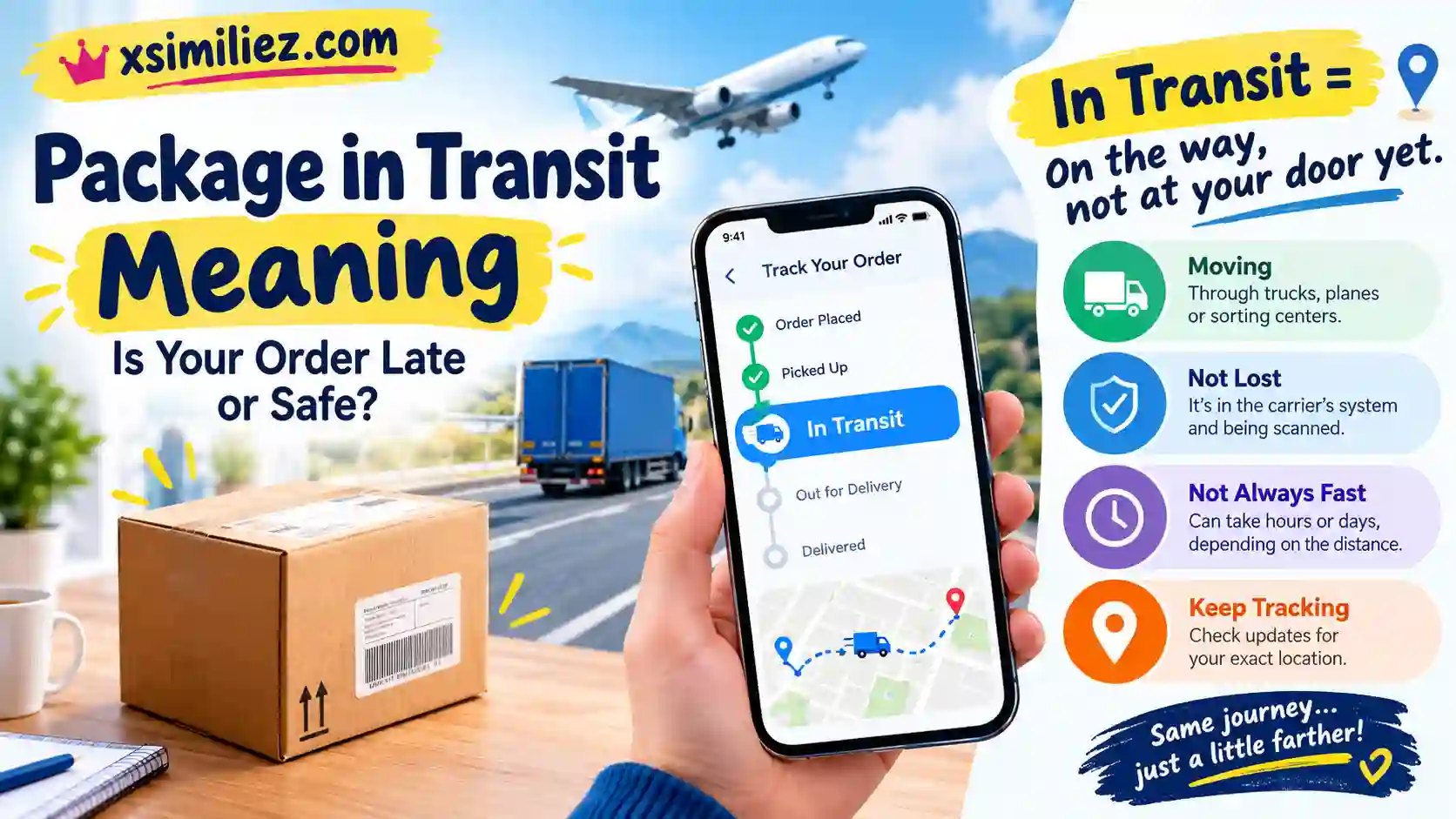
Package in transit meaning is simple: your order has left the sender and is on its way to you. It is not at your door yet, but it is moving through the shipping network.
You open your tracking page, see the words “in transit,” and wonder what they really mean. Is it close? Is it lost? Is something wrong? Millions of people ask these same questions every day, especially during busy shopping seasons.
In this guide, you will learn what the status means, what happens behind the scenes, how long it can last, and why it sometimes seems stuck. You will also get easy tips to track your order and know when to ask for help.
Quick Answer: Package in Transit Meaning in Plain Words
A package in transit is a package that is traveling from the sender to the buyer. The carrier has picked it up or accepted it, and it is now moving through trucks, planes, or sorting centers.
Think of it like a friend driving to your house. They have left their home, but they have not arrived yet. They might be on the highway, stopped for gas, or waiting at a red light.
“In transit” does not mean your package is lost, and it does not mean it will arrive today. It only means the journey has started and has not ended. Most of the time, this is good news. It tells you your order is real, it is moving, and it is on the way.
What Does “In Transit” Mean on a Tracking Page?
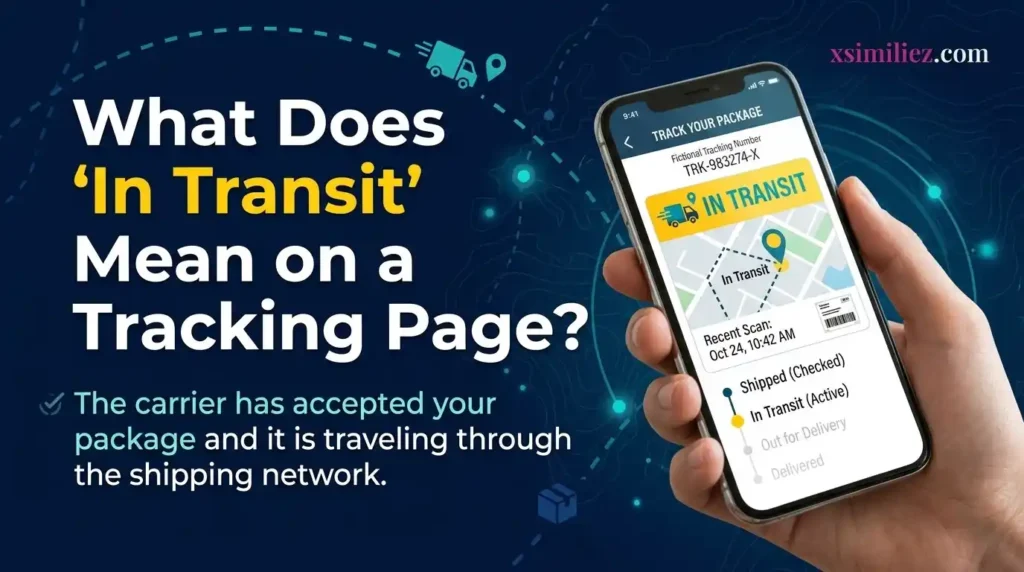
Every carrier uses its own words, but the idea stays the same. When you see “in transit,” the company has the package in its system. It has been scanned at least once, and it has not yet reached your local delivery team.
The word “transit” comes from a Latin word that means “to go across.” That fits well. Your package is crossing distance, If that is one city or half the country.
Different carriers may show slightly different messages. The United States Postal Service, UPS, and FedEx each write their updates in their own way. You may see short notes such as “in transit to the next facility,” “departed facility,” or “on the way.” These all point to the same thing: movement.
Here is something many people miss. “In transit” is a wide label. It can cover a package that left the warehouse an hour ago. It can also cover a package that has been traveling for several days. The label alone does not tell you how close you are. For that, you need to read the full tracking history, which shows dates, times, and places.
What Happens While a Package Is in Transit
Behind that short status is a lot of work. A package may be handled by many people and machines before it reaches you. Each stop usually creates a new scan, and each scan adds a line to your tracking history.
First, the package leaves the sender. It goes to a local pickup point or a carrier facility. From there, it moves to a larger sorting center, where machines read the label and send the box to the right truck or plane.
Next, the package travels toward your region. This leg can be long. It may ride on a truck overnight or fly across the country. Then it arrives at another sorting center near you. After that, it goes to your local post office or delivery station, where it is loaded for the final trip.
Here is a simple look at the usual path.
| Stage | What Is Happening | What You May See |
| Pickup | The carrier takes the package from the sender | “Picked up” or “Accepted” |
| First sorting | The package is scanned and sorted | “Arrived at facility” |
| Long-distance travel | It moves by truck, train, or plane | “In transit” or “Departed facility” |
| Regional sorting | It reaches a center near your area | “Arrived at regional facility” |
| Local delivery hub | It is prepared for the final trip | “Arrived at local facility” |
| Final trip | A driver brings it to your address | “Out for delivery” |
Not every package follows every step. A short trip across town may skip several of these stops. A long trip may add a few more.
Package in Transit vs. Other Tracking Statuses
Many people mix up tracking words. That can cause worry for no good reason. Knowing the difference helps you read your updates with a calm mind.
“Label created” means the sender has printed a shipping label, but the carrier may not have the package yet. This is different from a package in transit, because nothing is moving at this point. “Shipped” is a word that stores often use. It usually means the store has handed the order to a carrier, though the exact meaning can vary from store to store.
“Out for delivery” is the last step. At that point, the package is on a local truck and should reach you that day. “Delivered” means the carrier believes it has dropped it off at your address.
Here is how they compare.
| Status | What It Means | Is It Moving? | How Close Is It? |
| Label created | A label exists, but the carrier may not have the package | No | Not started |
| Picked up | The carrier has the package | Just starting | Far away |
| In transit | The package is traveling in the network | Yes | Could be far or near |
| Out for delivery | A local driver has it | Yes | Very close |
| Delivered | The carrier says it reached you | Done | At your address |
Names can change from one carrier to the next, so use this table as a general guide. If a word confuses you, the carrier’s help page usually explains it.
How Long Can a Package Stay in Transit?
There is no single answer. The time depends on the distance, the shipping method you picked, the carrier, and what is happening in the world that week.
Fast services may stay in transit for just a day or two. Slower, low-cost services can take a week or more. International orders often take longer, because they must pass through customs, which is the process where a country checks items coming in.
These are general ranges. Always trust the delivery estimate shown by your carrier or store, since it is based on your exact shipment.
| Shipping Type | Typical Time in Transit |
| Express or overnight | 1 to 2 business days |
| Standard ground within the U.S. | About 2 to 5 business days |
| Economy or low-cost shipping | About 5 to 10 business days or more |
| International shipping | Often 1 to 4 weeks, sometimes longer |
Remember that weekends and holidays may not count as business days. A package ordered on Friday may seem slow just because the weekend is in the middle. Also, some carriers do not scan the box on every stop, so your page may stay the same for a day or two even when the package is moving.
Why Your Package in Transit Seems Stuck
Sometimes the tracking page does not change for days. That can feel scary. Still, a quiet page does not always mean a problem.
One common reason is a long trip. If your package is riding on a truck or plane across the country, there may be no scan until it reaches the next facility. Another reason is high volume. During the holidays or big sales, carriers handle huge numbers of boxes, and sorting can fall behind.
Weather also plays a big part. Snow, storms, floods, and wildfires can close roads or ground flights. Packages then wait until it is safe to move again. Customs can slow international orders as well. If paperwork is missing or a package needs a closer look, it may sit for a while.
Of course, there are times when something really does go wrong. A label may be damaged, an address may be unclear, or a box may be sent to the wrong place. If you see no new update for a long time, it is smart to take action. Many carriers suggest waiting about a week before treating a package as missing, but the right number of days depends on the carrier and the service. Check your carrier’s own advice for the exact rule.
Common Mistakes People Make When a Package Is in Transit
A few simple habits can make this wait harder than it needs to be. Here are the most common ones.
The first mistake is panicking too early. A package that has not moved for one day is usually fine. Give it a little time, especially if there is bad weather or a holiday.
The second mistake is checking the wrong tracking number. Some stores give you an order number and a tracking number, and they look alike. Only the tracking number works on the carrier’s website. Another common error is typing one wrong digit, which shows “not found” and makes people think the package is gone.
The third mistake is calling the wrong company. If the store shipped your order, the store is often the first place to ask. The carrier can tell you where the package is, but the store can fix problems such as wrong addresses or lost items.
The fourth mistake is ignoring the estimated date. Many people only look at the status word and skip the date. The date tells you far more about Ifyour order is on time.
Finally, some people forget to check for a delivery address mistake. If the address was typed wrong at checkout, the package may travel far and then stall. Always look over your address as soon as you order.
Real-Life Examples of a Package in Transit
Examples make this idea easier to see, so here are three everyday cases.
Imagine Maria orders a pair of shoes on Monday. On Tuesday, her tracking page says “in transit” with a note that the shoes left a warehouse in another state. On Thursday, it says “arrived at the local facility.” On Friday, it says “out for delivery.” The shoes arrived that afternoon. This is the normal path, and nothing went wrong.
Now picture James, who buys a phone case from overseas. His page says “in transit” for nine days. He worries, but the updates show the box is moving between countries and waiting at customs. It takes about two and a half weeks in all, which fits the range for international shipping. His package was fine the whole time.
Last, think about Dana. Her page said “in transit” and then stopped changing for more than a week. She checked her address and saw a typo. She contacted the store, and they sent a replacement. In her case, waiting longer would not have helped. Asking for help was the right move.
Each story shows the same lesson. “In transit” is a normal part of shipping, but the dates and details tell you to relax or act.
Current Trends in Package Tracking
Tracking has changed a lot in recent years. Years ago, you might only see a few updates. Today, many carriers offer detailed pages, phone alerts, and delivery windows.
Many stores also let you track orders inside their own apps, so you do not need to visit the carrier’s site. Some carriers let you sign up for text or email updates, and some offer free tools that show photos of incoming mail or let you set delivery preferences. Features differ by company and by area, so check what your carrier offers.
At the same time, shipping volume has grown with online shopping, and people expect fast delivery. That is why “in transit” is one of the most searched tracking words. People want to know not only where a package is, but also If it is safe and on time.
Tips for Handling a Package in Transit
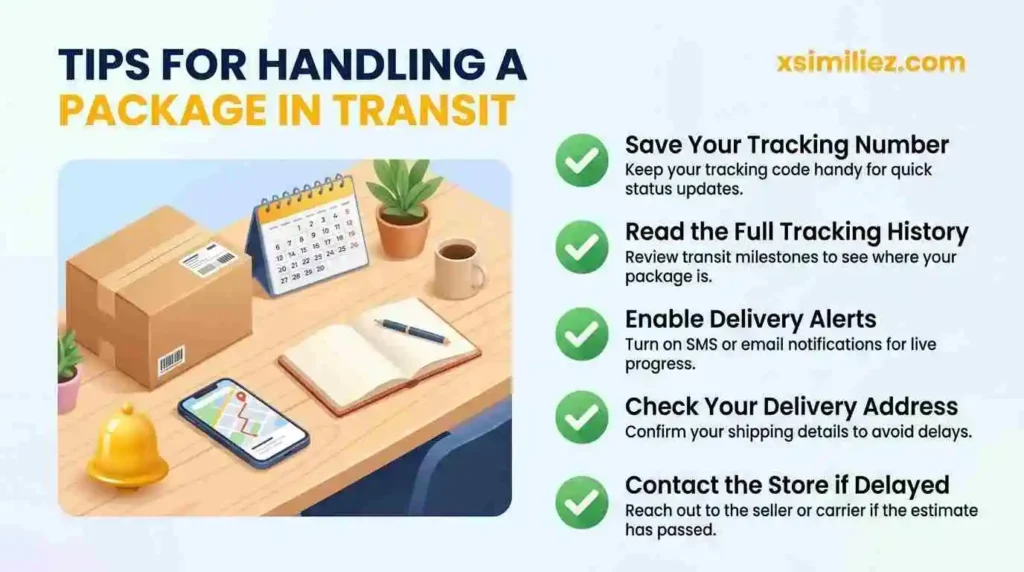
You cannot make a truck go faster, but you can stay calm and prepared. These steps help.
First, save your tracking number in a safe place. Copy it into the carrier’s own website, because that page often shows more detail than a store’s page.
Second, read the whole tracking history, not just the top line. The date of the last scan is the most useful clue.
Third, sign up for alerts if the carrier offers them. You will get news the moment something changes.
Fourth, make sure someone can receive the package. If you may be away, ask a neighbor to watch for it, or choose a hold-at-location option if one is available.
Fifth, give it a fair amount of time before you act. If the estimated delivery date has passed by a few days and the tracking has not changed, contact the store first. Keep your order number and tracking number ready. If the store cannot help, contact the carrier and ask about a search for the missing package.
Last, keep proof. Save emails, order receipts, and screenshots of your tracking page. If you need a refund or a replacement, these records can make the process much smoother.
FAQs
What does a package in transit mean?
It means your package has left the sender and is traveling to you through the carrier’s network. It has not reached your door yet.
Is a package in transit the same as shipped?
Not exactly. “Shipped” often means the store has sent the order to a carrier. “In transit” means the carrier is moving it. The words can overlap, and stores sometimes use them in different ways.
How long does a package stay in transit?
It depends on the distance and shipping method. Fast shipping may take one or two days, standard ground often takes a few days to a week, and international orders can take several weeks. Your estimated delivery date is the best guide.
Why has my package been in transit for so long?
Common reasons include long travel distances, weather, busy holiday seasons, and customs checks. Sometimes the box is moving but has not been scanned yet. If there is no update for about a week, contact the store or carrier.
Does “in transit” mean my package is lost?
No. In most cases it means the package is moving normally. A package is only considered lost after a long time with no updates, and the carrier must confirm it.
Can I change the delivery address while a package is in transit?
Sometimes. Some carriers offer address changes or redirects for a fee or under certain rules, while others do not. Contact the carrier or store as soon as possible, since options shrink as the package gets closer.
Conclusion
Package in transit meaning comes down to one clear idea: your order is moving toward you. It has left the sender, it is somewhere in the shipping network, and it has not been delivered yet. In most cases, that is a good sign.
The key is to look beyond those two words. Check the last scan date, read the estimated delivery window, and keep your tracking number handy. A short pause in updates is common, and most delays come from weather, busy seasons, or customs.
If days pass with no news, do not wait forever. Reach out to the store first, then the carrier, and keep your records close. With a little patience and the right steps, you will know what to do the next time you see “in transit.”

Hi, I’m Mason Avery, a content writer at Xsimiliez.com. I like writing about similes, figurative language, and creative expressions. I believe learning English becomes easier when examples feel natural and relatable.