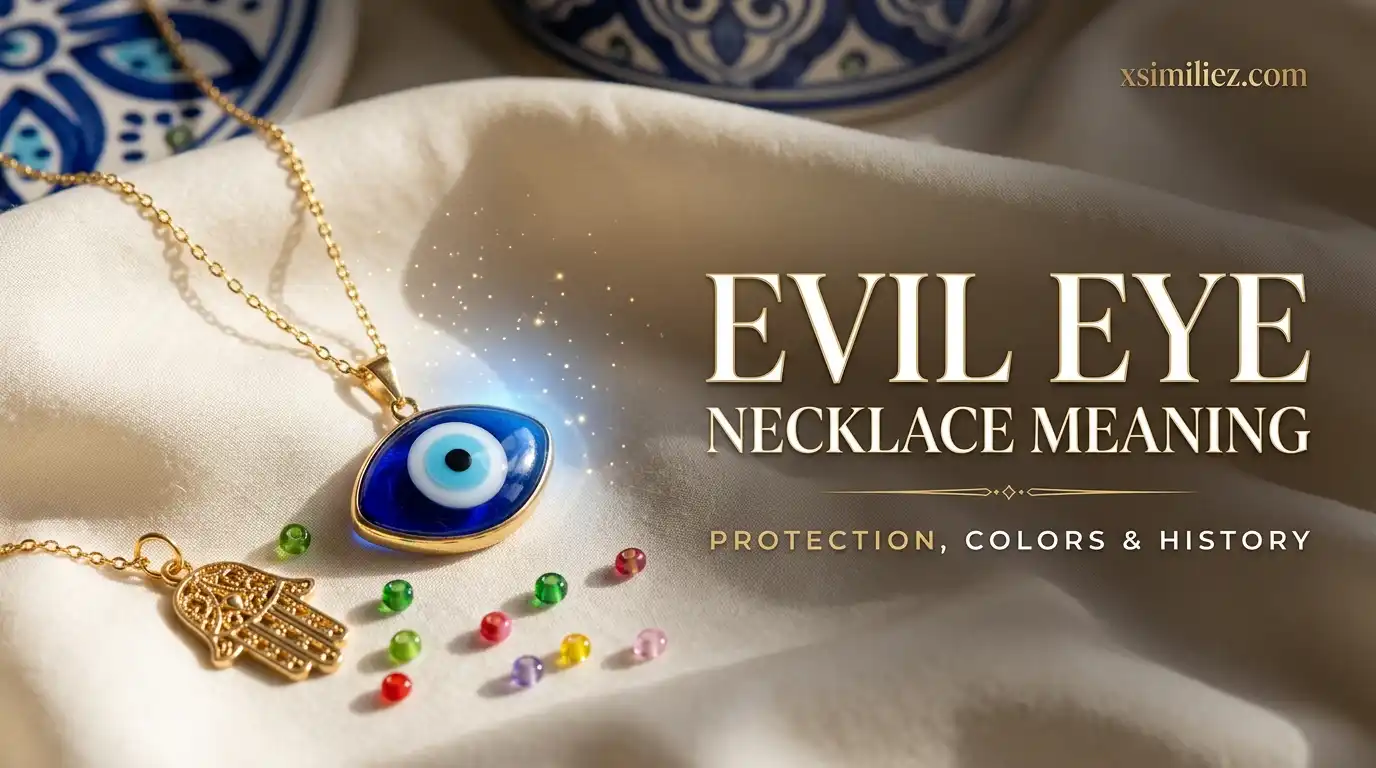
The evil eye necklace’s meaning is simple. It is a charm that protects the person wearing it from envy, bad luck, and harmful stares. The round blue eye is believed to look back at negative energy and keep it away. People have worn charms like this for thousands of years.
Maybe you saw one on a friend, in a shop window, or on a celebrity, and you wondered what it was all about. You are not alone. Many people search for this topic because the necklace is pretty, full of history, and also makes a thoughtful gift.
In this guide, you will learn what the evil eye is, where it came from, and what the colors and shapes mean. You will also learn how to wear it, what it means if it breaks, and which mistakes to avoid. Let’s get started.
Quick Answer: Evil Eye Necklace Meaning
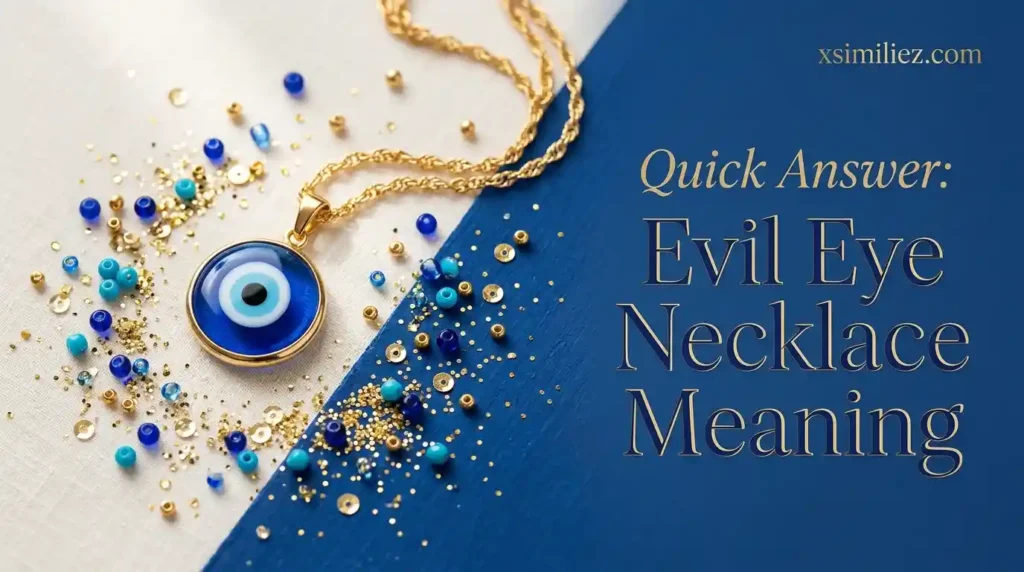
An evil eye necklace is a piece of jewelry with an eye-shaped charm, most often made of blue glass. The charm is a symbol of protection. People believe it guards them against the ‘evil eye,’ which is a look filled with jealousy or ill will that can bring bad luck.
Think of it like a tiny bodyguard that hangs near your heart. It does not need to be turned on or charged. The belief is that the eye simply watches over you. For many people, it also stands for good luck, calm, and a sense of safety.
Here is a quick look at what the necklace stands for.
| Part of the Necklace | Common Meaning |
| The eye shape | Watchfulness and protection |
| Blue color | Safety, calm, and defense against envy |
| Round glass bead | Wholeness and a shield around the wearer |
| Gold or silver chain | Style and lasting strength |
| Hamsa hand with an eye | Extra protection and blessings |
Keep in mind that science has not proven that these charms work. Most people wear them as a cultural symbol, a comfort, or a style choice. All of those reasons are perfectly fine.
What Is the Evil Eye?
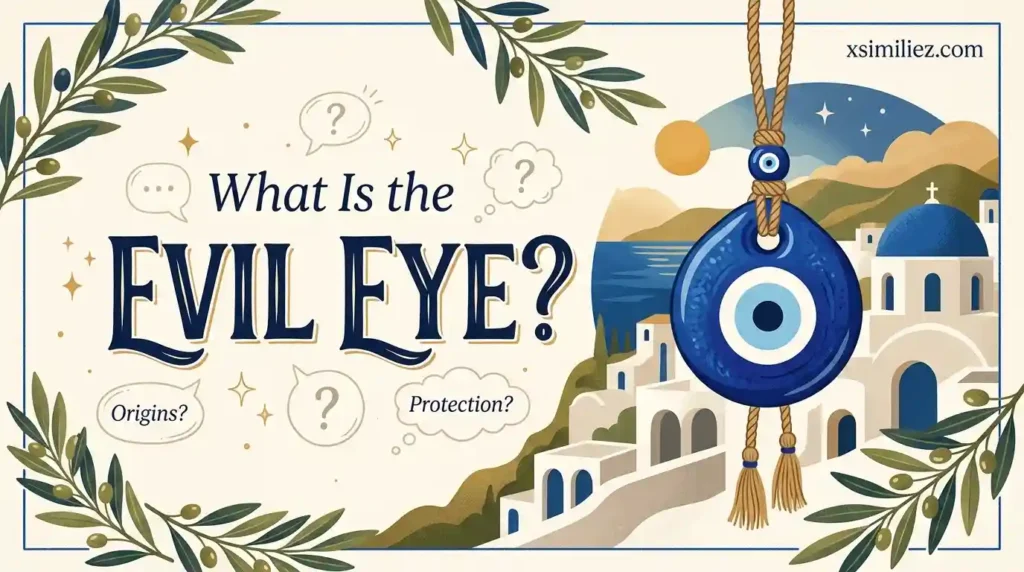
The evil eye is an old belief that a person can cause harm just by looking at someone. Usually, the look comes from envy. Someone sees your new home, your healthy baby, or your big success, and they wish they had it. The belief says that this strong, jealous stare can bring illness, bad luck, or trouble.
The curse is not always meant to be cruel. Many cultures believe a person can give the evil eye by accident. Even a kind compliment, if it is a little too full of envy, might do it. That is why people in many places say a short blessing right after they praise something. In Turkey and across South Asia, people often say ‘mashallah,’ which means ‘God has willed it.’
The idea has different names around the world. In Turkey and Pakistan, it is called nazar. Greeks call it mati. In Spanish, it is mal de ojo. In Hebrew, it is ayin hara, and in Italy, it is malocchio. The names change, but the idea stays the same: a jealous look can hurt.
It is worth saying that there is no scientific proof that the evil eye can harm anyone. It is best understood as a cultural belief and tradition. For millions of people, though, it is a real and meaningful part of daily life.
Origin and History of the Evil Eye Necklace
The belief in the evil eye is very old. Some historians trace it back to ancient Mesopotamia, which is part of modern Iraq. It also appears in the writings of ancient Greece and Rome. Plutarch, a Greek writer who lived about 2,000 years ago, wrote about people who were thought to harm others with their gaze.
Eye symbols were also popular in ancient Egypt. The Eye of Horus was a sign of protection and health. It is not the same thing as the evil eye charm, but it shows how long people have trusted eye shapes to guard them.
The blue glass bead we know today is closely tied to Turkey. There, it is called nazar boncuğu, which means ‘evil eye bead.’ Glassmakers near Izmir, on the Aegean coast, are especially known for making them by hand. Families hang them over doors, put them in cars, and pin them on baby clothes.
Why blue? No one knows for sure, and reliable records on this are limited. One common idea is that blue was seen as a strong protective color in the Mediterranean and Middle East. Another idea is that blue eyes were less common in those areas, so a light-eyed stare was thought to be unusual and a little scary. Either way, the blue charm became the classic design.
So when did people first wear the charm as a necklace? There is no clear date. As jewelry became more personal and portable, people simply moved the charm from the door to the neck, so protection could go wherever they went.
What the Design of the Evil Eye Necklace Means
Most evil eye charms look like a set of circles. A dark blue circle sits on the outside. Inside it is a white ring, then a light blue ring, and finally a black dot in the center. Together, they look like an eye staring right at you.
That stare is the whole point. The charm is meant to meet the harmful look and send it away. Some people say it reflects the envy back, like a mirror. Others say it soaks up the bad energy so it never reaches you.
Evil eye necklaces come in many styles. Here are the most common ones and what they usually stand for.
| Design | What It Usually Means |
| Classic blue glass bead | Traditional protection against envy |
| Eye with a Hamsa hand | Protection plus blessings and strength |
| Eye with a tiny star or moon | Guidance, hope, and good fortune |
| Gemstone eye (turquoise, onyx) | Protection mixed with the stone’s own meaning |
| Tiny gold eye charm | Quiet, everyday protection with modern style |
The Hamsa deserves a quick note. It is a hand-shaped charm popular in the Middle East and North Africa. Many people call it the Hand of Fatima, and some Jewish traditions call it the Hand of Miriam. When an eye sits in the middle of the palm, it doubles the protection.
Evil Eye Necklace Color Meaning
Dark blue is the classic color, but evil eye charms now come in many shades. It is important to know that there is no single official color guide. Meanings change by region and by seller. The list below shows the most popular modern meanings.
| Color | Popular Meaning |
| Dark blue | Strong all-around protection and good luck |
| Light blue or turquoise | Calm, honesty, and good health |
| Green | Growth, luck, and a healthy life |
| Red | Courage, energy, and love |
| Yellow or gold | Confidence, joy, and success |
| Pink | Self-love, kindness, and gentle energy |
| White | Peace, purity, and fresh starts |
| Black | Strength and shielding from strong negativity |
| Purple | Wisdom and spiritual growth |
So which color should you pick? If you want the traditional meaning, go with dark blue. If you want a charm that matches a goal, such as more confidence or more love in your life, choose the color that fits. Most of all, choose one you enjoy looking at. A necklace you love is one you will actually wear.
Evil Eye Necklace Meaning in Different Cultures
The evil eye is not owned by one country or religion. It shows up all over the world, and each place has its own habits and charms.
| Region | Local Name | Common Practice |
| Turkey | Nazar boncuğu | Blue glass beads on doors, cars, and baby clothes |
| Greece | Mati | Blue eye charms and pins; some people say ‘ftou ftou’ as a symbolic spit |
| Middle East and North Africa | Ayn or Hamsa | Hand-shaped charms with an eye |
| South Asia | Nazar | Black dot on a child’s face, black threads, and lemon-and-chili charms |
| Italy | Malocchio | Horn-shaped charms and hand gestures |
| Latin America | Mal de ojo | Red bracelets and charms for babies |
Religious views are mixed. Some religious scholars teach that people should turn to prayer and trust in God instead of wearing charms. Other people see the necklace as a cultural tradition, not a religious act. If faith matters to you, it is wise to follow the guidance of your own community and teachers.
What It Means When Your Evil Eye Necklace Breaks
This is one of the most common questions people ask. Many believe that when an evil eye bead cracks, breaks, or falls apart, it has soaked up a lot of negative energy. In other words, it did its job. The charm took the hit so that you did not have to.
Traditionally, people do not feel sad about it. They say thank you to the charm, take it off, and replace it with a new one. Some people bury it or throw it away respectfully. There is no single right way, so do what feels natural to you.
There is also a plain, practical reason a bead might crack. Glass is fragile. A hard knock on a sink, a drop on the floor, or a sudden change in heat can crack it. So if yours breaks after a normal day, there is no need to worry. Just enjoy the story, and pick a new one when you are ready.
How to Wear an Evil Eye Necklace
There are no strict rules, which makes this easy. Still, a few popular habits can help you decide.
Many people wear the charm close to the heart or on the chest. Others like a shorter chain near the collarbone. A longer chain, around 20 inches or more, can hang at the center of the body and works well over a shirt or sweater. Some believe the eye should be visible and face outward so it can ‘see’ and block envy. If that idea feels meaningful to you, let the charm show.
Should you buy it yourself or get it as a gift? Many families like the tradition of receiving one as a gift, because it carries care and good wishes. But there is no rule against buying your own. If you love it, wear it.
You can also layer it with other necklaces. A small gold eye looks lovely next to a thin chain with your initial. For sensitive skin, stainless steel, gold-filled, or sterling silver chains are usually safer choices. And if your charm is made of glass, remove it before sports, swimming, and heavy work.
Common Mistakes People Make With Evil Eye Necklaces
The first mistake is treating the necklace like a magic shield. It is better to see it as a symbol of protection and a source of comfort. It cannot replace good judgment, kind choices, or real help when you need it.
Another mistake is buying a poor-quality charm. Cheap pieces may have paint that peels off or a clasp that snaps. If you care about tradition, look for real glass or well-made metal and enamel. Check reviews and read how the item is made before you buy.
People also mix up symbols. The evil eye, the Hamsa, and the Eye of Horus are related, but they are not the same. Each has its own history. Knowing the difference shows respect for the cultures behind them.
Finally, some people treat the charm only as a trend and forget its roots. You do not have to be an expert, but taking a minute to learn what it means is a nice way to honor the people who created it. Also, avoid expecting one specific color to guarantee a specific result. Colors are guides for your own meaning, not promises.
Real-Life Examples of Evil Eye Necklaces in Everyday Life
The examples below are common everyday situations, not stories about any one person.
Imagine a new mom in Istanbul. Family and friends visit to meet the baby, and everyone says kind things. To be safe, she pins a small blue bead to the baby’s blanket. It is a gentle habit passed down from her grandmother.
Now picture a college student in Karachi or Lahore. She has a big exam coming and feels nervous. Her cousin gives her a tiny evil eye necklace. She does not think it will answer the questions for her, but wearing it makes her feel calm and cared for.
Then there is a small business owner who has just opened a shop. Customers are coming, social media is growing, and some people are jealous. She wears a dark blue evil eye necklace to work each day. For her, it is a reminder to stay focused and positive.
In each case, the necklace plays a different role. It might be tradition, comfort, or a quiet reminder to stay strong.
Current Trends in Evil Eye Jewelry
Evil eye jewelry has moved far beyond its traditional roots. Today, you will see tiny gold eyes, enamel charms, diamond accents, and gemstone versions in turquoise or onyx. Jewelry makers also offer bracelets, earrings, and rings that go with the necklaces.
Minimalist styles are especially popular. A thin chain with a small eye charm looks neat at work and also fits a night out. Layered necklaces, where several delicate chains hang together, are another favorite look. Some people even mix an evil eye with a birthstone or an initial for a personal touch.
The symbol is also common on social media, in home decor, and on phone cases. With so many choices, it helps to know the difference between handmade glass beads from traditional workshops and mass-produced pieces. Both can be nice. The handmade ones often carry more cultural value, while the mass-made ones are usually easier on the budget.
Tips for Choosing and Caring for Your Evil Eye Necklace
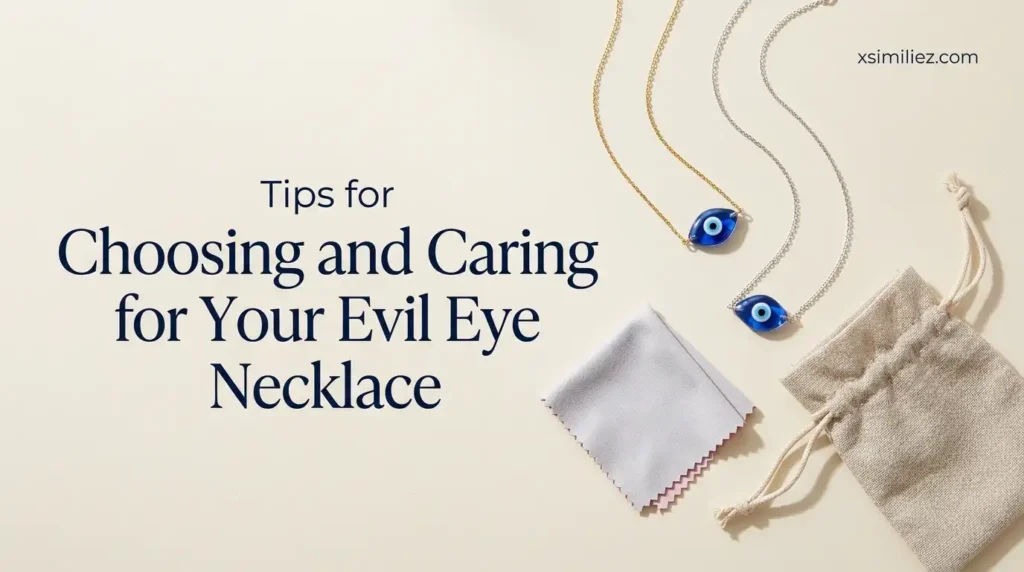
Start with the material. Glass beads are traditional and beautiful, but they can break. Metal and enamel charms are more durable for daily wear. If you have sensitive skin, look for hypoallergenic metals such as sterling silver, stainless steel, or gold-filled chains.
Next, think about size. A small charm feels delicate and works well for daily wear. A larger charm makes a bold statement and can be the star of an outfit. Try holding the charm against your shirt in a mirror, if you can, to see how it looks.
For care, wipe the charm with a soft, dry cloth after wearing it. If it needs a deeper clean, use a little mild soap and warm water, then dry it right away. Keep it away from perfume, chlorine, and harsh cleaners, which can dull the finish. Store it in a soft pouch or a separate jewelry box compartment so it does not scratch or knock against other pieces.
Lastly, set your own meaning. Some people like to hold the charm and think of a goal or a wish when they put it on. That small habit can turn a pretty piece of jewelry into something truly personal.
FAQs About Evil Eye Necklace Meaning
What does an evil eye necklace mean?
It means protection from envy, bad luck, and harmful looks. The eye shape watches over the wearer, and the blue color is traditionally linked to safety and good fortune.
Where should I wear an evil eye necklace?
Most people wear it on the chest, close to the heart. Some like it visible so the eye can face outward. There is no strict rule, so choose what feels right.
Can anyone wear an evil eye necklace?
Yes. People of all ages, backgrounds, and beliefs wear them. It helps to learn the meaning and wear it with respect for the cultures that created it.
What does it mean if my evil eye necklace breaks?
A common belief is that the charm absorbed negative energy and protected you. It can also simply be that glass is fragile. Either way, you can replace it with a new one.
Is an evil eye necklace religious?
Not exactly. It is mostly a cultural symbol that appears across many regions and faiths. Some religious teachers advise prayer instead of charms, so follow the guidance of your own faith.
Which color evil eye necklace is best?
Dark blue is the traditional choice for protection. Other colors carry different meanings, such as green for luck or red for courage. The best color is the one that fits your goal and style.
Conclusion
The evil eye necklace’s meaning comes down to protection. The eye-shaped charm is believed to guard you from envy and bad luck, and the blue color adds a feeling of calm and safety. Its roots reach back thousands of years across many cultures, from Turkey and Greece to South Asia and Latin America.
At the same time, it is wise to stay realistic. Science does not prove that the charm works, and it is not a replacement for good choices or real help. Think of it as a symbol that gives comfort, honors tradition, and looks lovely too. If it cracks one day, just thank it and move on.
If you are ready to buy one, pick a color that matches your goals, choose good materials, and take a moment to learn the story behind it. Care for it gently, wear it with respect, and let it remind you to stay positive. A small charm can carry a big message.

Hi, I’m Harper Blake, and I write for Xsimiliez.com. I enjoy sharing clear and friendly simile examples that students and beginners can understand easily. My goal is to make English learning simple and enjoyable.