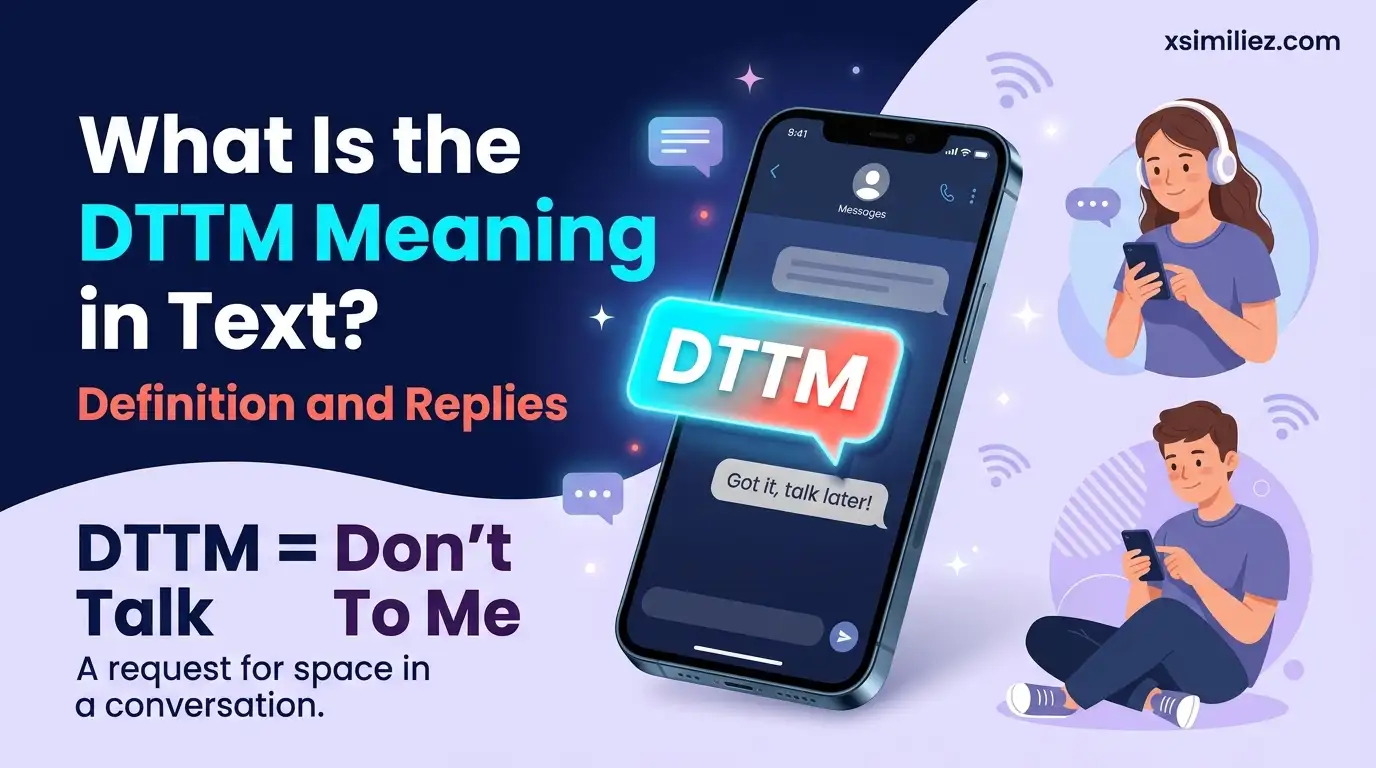
The DTTM meaning in text is most often “Don’t Talk To Me.” People send it when they want space, feel annoyed, or need a break from a chat. That is the short answer, but the full story has a few twists.
You may have seen it in a message from a friend, a crush, or a family member. Maybe it popped up in a group chat and left you confused. You are not alone. Texting slang changes fast, and nobody wants to guess wrong about a message that sounds upset.
In this guide, you will learn what DTTM means, how people use it, and where it may have come from. You will also see real examples, common mistakes, and tips for replying. We will look at the other meanings of DTTM in tech and business too.
Quick Answer: DTTM Meaning in Text
In most chats, DTTM stands for “Don’t Talk To Me.” It is typically used to tell the person on the other end not to send any more texts. The sender is saying, “I need space right now.“
The tone can change with the situation. Sometimes it is serious, like after a fight. Other times it is a joke between close friends, maybe after someone teases them before breakfast. A smiley face or a laughing emoji often shows the playful version. A short, cold message with no emoji usually means the person is truly upset.
One more thing is worth knowing. DTTM is not an official word in any dictionary. It is informal slang, so the meaning always depends on who sends it and why. When in doubt, look at the rest of the conversation before you decide how to feel.
What Is the Full DTTM Meaning in Text
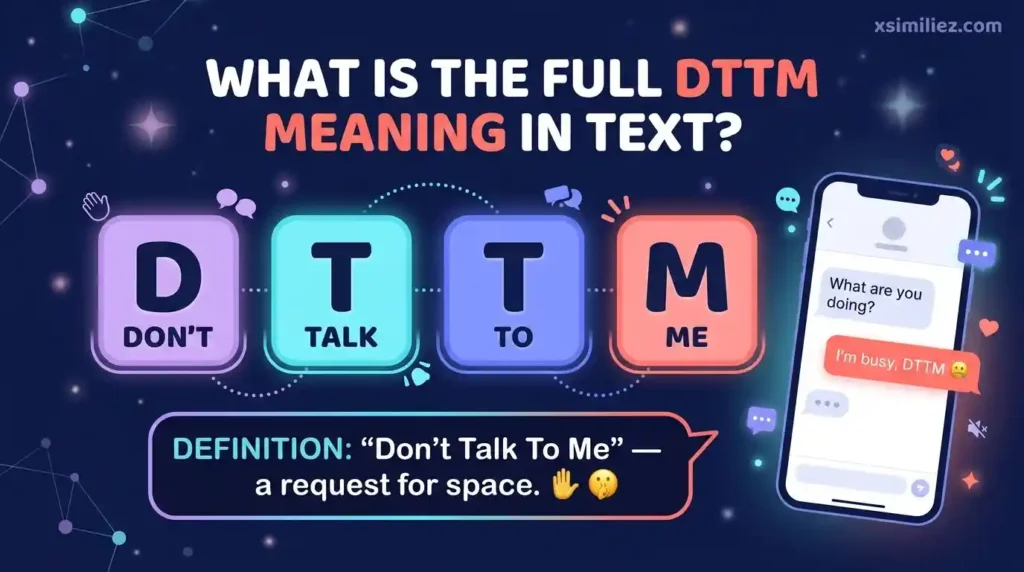
Let’s break it down. The letters D, T, T, and M stand for four words: Don’t, Talk, To, Me. Together, they make a simple request. The writer wants you to stop chatting for now.
Notice that the phrase is about timing, not about forever. Most people who send DTTM mean “not right now.” They might be tired, busy, sad, or angry. They might be watching a movie, studying, or driving. The message is a quick way to say, “Please give me some room.”
Here is a useful comparison. Saying “Leave me alone” sounds harsh and final. DTTM feels lighter because it is short and a little casual. That is why many people pick it, even when they feel upset. It lets them set a boundary without writing a long message.
Still, the same letters can mean other things outside of texting. The table below shows the main ones.
| Where You See It | What DTTM Means | Tone |
| Texting and social media | Don’t Talk To Me | Casual, sometimes upset |
| Databases and computer code | Date and time (short for “datetime”) | Technical, neutral |
| Business forms and data files | A column holding a date and time stamp | Technical, neutral |
| Government and transport documents | An agency name in some countries | Formal |
As you can see, the texting meaning is only one of several. If you spot DTTM in a spreadsheet or a software report, it almost surely refers to a date and time field. Programmers often write it as a short name for “datetime.” That is a very different idea from a friend asking for quiet.
Grammar and Correct Usage of DTTM in Text
DTTM is an acronym, which means each letter stands for a word. People write it in capital letters (DTTM) or small letters (dttm). Both are fine in casual chats. Capitals can make it look a bit louder, like raising your voice.
It works like a full sentence on its own. You can send it alone, or you can add a few words after it. For example, “DTTM, I’m tired” or “DTTM until tomorrow.” Adding a reason or a time often makes the message feel kinder.
You do not need a period after it. Most people skip punctuation in texts anyway. An exclamation mark (“DTTM”) makes it sound stronger. Three dots (“DTTM…”) can make it sound sad or tired.
Here are a few simple rules to follow:
Use it only with people who know slang. Your best friend will get it right away, but your grandmother might think you typed a mistake. It also does not belong in school emails, job messages, or notes to a teacher. In those places, a polite full sentence works much better, like “I need a little time before we talk.”
Think about the person who will read it, too. A short slang message can feel cold to someone who is already worried. If you care about the relationship, a softer line may protect it better than four capital letters.
Origin of DTTM: Where Did This Slang Come From?
Here is where honesty matters. No trusted dictionary or language expert has recorded when or where DTTM began. Anyone who gives you an exact date or inventor is guessing.
What we can say is that DTTM follows a long texting habit. When people typed on small phone keypads, every letter cost time. So they shortened common phrases, like “LOL,” “BRB,” and “IDK.” Short acronyms for feelings and requests became normal, and later they spread through social media and group chats.
DTTM fits that pattern well. It packs a full request into four letters. Many slang sites describe it as a way to say “don’t talk to me,” and some low-quality pages also claim it means things like “don’t touch this message” or “dance to the music.” Those claims show up on thin, copy-style websites and have no strong proof behind them. So the safest answer is this: “Don’t Talk To Me” is the widely repeated meaning, but its true origin is unknown.
The data meaning has a clearer story. In computing, “datetime” describes a value that holds both a date and a time. Shortening it to “dttm” is a common naming habit in databases. That use has nothing to do with texting, even though the letters match.
Common Mistakes When Reading or Using DTTM in Text

The biggest mistake is guessing the meaning without looking at the context. DTTM can feel scary when you see it alone, so people sometimes imagine the worst. Take a breath. Read the messages before it, think about the person’s mood, and then decide.
Another mistake is using it with the wrong audience. Imagine sending DTTM to your boss after a long day. It might look rude, even if you only meant “I’m tired.” Slang is best for friends and family who know you well.
People also mix it up with similar letters. DTM, TTM, and DTTM look close, but they do not match. Some pages say “TTM” means “Talk To Me,” which is nearly the opposite of DTTM. One missing letter can flip the whole message. Check the spelling before you reply.
Here are other slips to avoid:
Do not treat DTTM as a final goodbye. Most of the time, it means “not now,” and the person will talk again later. Do not keep sending messages after someone writes it. That ignores the boundary and can make things worse. And do not use it as a weapon in an argument, since a cold acronym can hurt more than you expect.
Last, do not assume everyone understands it. Younger users and heavy texters know many acronyms, but plenty of adults do not. If you are not sure, ask a gentle question like, “Do you need space right now?”
Real-Life Examples of DTTM Meaning in Text
Examples make the meaning clear. Below are a few common situations and how each one might look in a real chat. After the table, you will find short stories that show how each case can play out.
| Message Received | Likely Meaning | Good Reply |
| “DTTM, I just got home from work 😩” | I’m worn out and need quiet | “Got it. Text me when you feel better.” |
| “DTTM until I cool down.” | I’m angry and need time | “Okay. I’m here when you’re ready.” |
| “lol DTTM, I’m watching the game” | A joke, I’m busy | “Haha, enjoy the game” |
| “DTTM right now.” | I’m upset, please stop | “I hear you. I’ll give you space.” |
Now let’s look at a few short stories. Maya texts her sister about weekend plans, but her sister has had a long, bad day. Her sister writes, “DTTM tonight.” Maya does not take it personally. She answers, “No problem, talk tomorrow,” and they chat happily the next afternoon.
In another case, two friends argue about a borrowed jacket. One friend writes, “DTTM.” The other friend wants to explain, but she waits instead. Two hours later, the first friend sends a message to apologize. The pause helped them both calm down.
A playful example happens in group chats. Someone loses a video game round and types, “DTTM for the next ten minutes 😂.” Everyone laughs and teases them. Here the letters are just a joke. The emoji and the mood of the group give it away.
Notice the pattern in every story. The best reply is calm, short, and respectful. You honor the request, and you leave the door open for later.
Current Usage and Trends of DTTM in Text
Today, DTTM lives mostly in private chats, direct messages, and comment sections. You are likely to see it on apps like Snapchat, Instagram, Discord, and plain text messaging. It shows up less in public posts, since people often prefer to write longer and clearer sentences there.
It is not as popular as slang like “IDK” or “BRB.” Many people have never met it at all. That is why articles about the term keep appearing: readers see the letters, feel unsure, and search for help. This kind of curiosity is common with newer or smaller slang words.
Another trend is that people now care more about setting boundaries. Phones buzz all day, and many users feel tired of constant messages. Short phrases that say “I need a break” fit this mood. Some people use DTTM, others write “taking a social media break,” and others set “Do Not Disturb” on their phones.
Meanings may also shift over time. Slang often changes as new groups pick it up. A word that is rude in one circle can be silly in another. So if you see DTTM in a new app or community, give yourself a moment to read how others use it. Because the term has no official rulebook, local habits matter a lot.
For anyone who works with data, the “datetime” meaning is steady and has not changed. If you work with spreadsheets or databases, a DTTM column will remain a date-and-time field. Just keep your context in mind, and you will rarely mix them up.
Tips and Best Practices for Using or Answering DTTM in Text
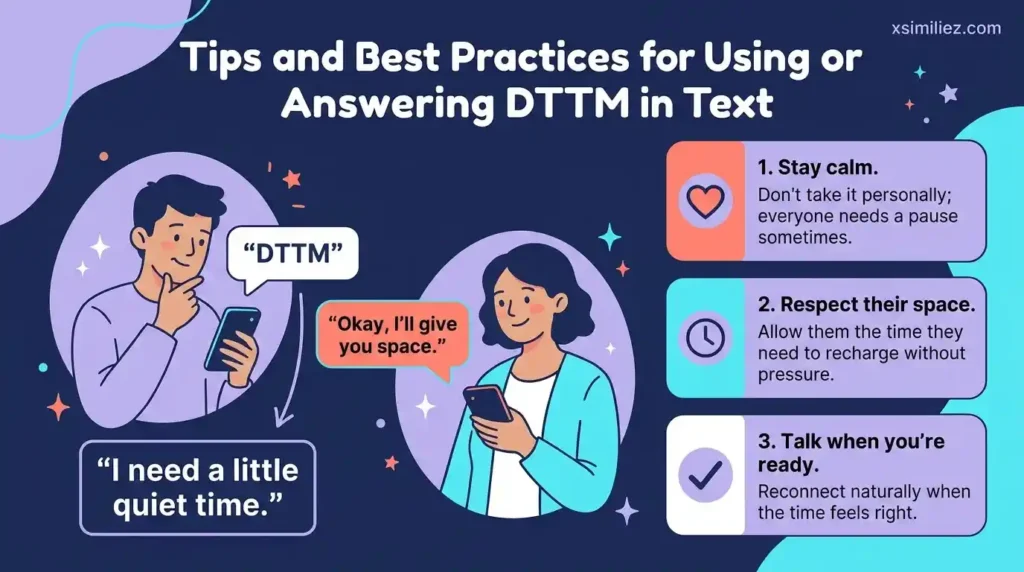
If you send it or receive it, a few habits will keep chats friendly. Start with the person who receives your message. Ask yourself, “Will this feel harsh?” If the answer is yes, add a few kind words, such as “DTTM for now, I need to rest, but I’m not mad at you.”
If you receive it, follow these steps. First, stay calm and do not reply with a long message. Second, say something short like “Okay, I’ll give you space.” Third, wait before you text again. Giving the person time shows that you respect them.
Here are more helpful ideas. When you want to use slang, pick the right moment and the right friend. Add a time limit, like “DTTM until 8,” so the other person knows when to expect you. Use a friendly emoji if you are joking. And if you feel very upset or unsafe, do not rely on slang alone. Talk to a trusted adult, friend, or family member in plain words.
You can also use softer options when you want to avoid sounding cold. For example, you might write “I need a little quiet time,” “Can we talk later?” or “I’m not up for chatting right now.” These lines say the same thing as DTTM, but they feel warmer. In tense moments, the kind version usually works better.
Finally, remember that texts lack voice and face cues. A person cannot hear your tone, so clear words help. When you are unsure how someone feels, a kind question is better than a guess.
FAQs About DTTM Meaning in Text
1. What does DTTM mean in text?
It most commonly means “Don’t Talk To Me.” The sender wants space or quiet for a while. It can be serious or playful, so check the mood of the chat.
2. Is DTTM rude?
It can sound rude if it is sent coldly or without a reason. Among close friends it is often a joke. Adding a few kind words or an emoji makes it feel softer.
3. Does DTTM mean the same thing as DTM or TTM?
No. Those are different letter groups. TTM is often read as “Talk To Me,” which is the opposite of DTTM. DTM has several meanings, such as “Down To Meet.” Always check the exact letters.
4. What does DTTM mean in databases?
In computing, it is a short form of “datetime.” It names a column or field that stores both a date and a time, like when a file was created. It has nothing to do with chat slang.
5. How should I reply when someone sends DTTM?
Keep your answer short and kind. Something like “Okay, I’ll give you space” works well. Then wait before you text again, so the person has time to feel better.
6. Who first started using DTTM?
Nobody knows for sure. There is no trusted record of its first use. It likely grew from the long habit of shortening phrases in texts, but that is an educated guess, not a proven fact.
Conclusion
Now you know the DTTM meaning in text. In casual chats, it nearly always means “Don’t Talk To Me,” a quick way to ask for space. In computers and data, the same letters usually mean “datetime.” Context is the key that tells you which one fits.
Remember that this slang has no official source or rulebook. Its exact origin is not proven, and some websites share doubtful meanings that you should not trust. When you see the letters, read the whole conversation and think about the person’s mood before you react.
The best advice is simple. Respect the request when someone sends DTTM, and reply with calm, short words. If you want to set your own boundary, a kind full sentence often works better than four letters. Clear and gentle messages help friendships stay strong, even on tough days.

Hi, I’m Mason Avery, a content writer at Xsimiliez.com. I like writing about similes, figurative language, and creative expressions. I believe learning English becomes easier when examples feel natural and relatable.