If you have ever read the Bible or gone to church, you have probably heard the word “Sabbath.” But what does it actually mean? The sabbath meaning in Bible terms is simple: it is a special day of rest and worship that God set apart from all the other days of the week.
People search for this topic because they want to understand where the idea comes from, why it matters, and if they should keep it today.
In this article, you will learn what the Bible says about the Sabbath, where the idea started, how Jews and Christians view it differently, and how you can apply its lesson of rest in your own busy life.
Quick Answer
The Sabbath is the seventh day of the week, a day set aside by God for rest and worship. In the Bible, it starts with God resting after creating the world in six days. Later, God commanded the people of Israel to rest on this day too, as part of the Ten Commandments.
For most Jewish people, the Sabbath is Saturday. For many Christians, Sunday became the main day of worship instead, though the core idea of rest stayed the same.
Meaning or Definition of Sabbath
The word “Sabbath” comes from the Hebrew word Shabbat, which means “to stop,” “to rest,” or “to cease from work.” That is really the heart of it. The Sabbath is not about being lazy. It is about stopping your normal work on purpose so you can rest your body and focus on God.
In the Bible, this idea first shows up in the story of creation. Genesis 2:2-3 says that after God made the heavens, the earth, and everything in them in six days, He rested on the seventh day. He did not rest because he was tired. He rested to set an example and to make that day holy, meaning special and set apart from ordinary days.
Later, this pattern became a rule for the people of Israel. It was not just a nice idea anymore. It became a command they were expected to follow every single week.
Origin or History of the Sabbath
The Sabbath did not start as a random rule. It grew out of two big moments in the Bible’s story.
The first moment is creation, which we already talked about. God worked for six days and rested on the seventh. This gave people a pattern to follow, even before any laws were written down.
The second big moment happened much later, after God’s people had been slaves in Egypt for hundreds of years. When God freed them and led them out through Moses, He gave them a set of laws called the Ten Commandments. One of these commandments was about the Sabbath.
Exodus 20:8-11 says, “Remember the Sabbath day, to keep it holy.” It goes on to explain that people should work for six days, but on the seventh day, nobody should work. Not the person, not their children, not their servants, and not even their animals.
A second version of this same command appears in Deuteronomy 5:12-15. This one adds an extra reason. It reminds the people that they were once slaves in Egypt, forced to work without rest. Now that God had freed them, they were told to give rest to themselves and everyone under their care, including servants and animals. In other words, the Sabbath was also a symbol of freedom. Slaves do not get days off. Free people do.
So the Sabbath carries two big ideas at once: it copies God’s own rest pattern from creation, and it reminds people that freedom includes the right to stop working and breathe.
What the Sabbath Rules Looked Like
The Bible gets fairly specific about what “not working” meant. Over time, Jewish teachers and religious leaders added even more detailed rules to make sure people understood exactly what counted as work. Here is a simple table showing some of the basic ideas found in the Old Testament.
| Sabbath Rule | Bible Reference | What It Meant |
| No regular work | Exodus 20:10 | People, children, and servants all rested |
| No work for animals | Exodus 20:10 | Even farm animals got a day off |
| No gathering firewood | Numbers 15:32-36 | Even small daily tasks were paused |
| No buying or selling | Nehemiah 10:31 | Markets and trade stopped |
| Rest tied to freedom from slavery | Deuteronomy 5:15 | A reminder that all people deserve rest |
| Holy day for worship | Leviticus 23:3 | A “sacred assembly,” a time to gather and focus on God |
As you can see, the Sabbath was not just about skipping chores. It touched almost every part of daily life, from farming to shopping to cooking.
The Sabbath in the New Testament
By the time Jesus came along, religious leaders had added so many extra rules about the Sabbath that some people felt trapped by them instead of refreshed. The Gospels describe several moments where Jesus pushed back against this.
In Mark 2:27, Jesus said something important: “The Sabbath was made for man, not man for the Sabbath.” This means the Sabbath was meant to help people, not to burden them with endless rules. Jesus taught that showing kindness, healing the sick, and helping others were things that fit perfectly well on the Sabbath, even if strict religious leaders disagreed.
Jesus also healed people on the Sabbath multiple times, which caused arguments with religious leaders who felt this broke the rules. But Jesus argued that doing good and showing mercy should never be forbidden, no matter what day it is.
This shift in the New Testament did not erase the Sabbath. Instead, it reshaped how people thought about it. The focus moved from a long list of “do nots” to the deeper purpose behind the day: rest, worship, and caring for others.
Saturday, Sunday, and Why the Day Changed
One question people often ask is why some Christians worship on Sunday instead of Saturday. This is a common point of confusion, so let’s break it down clearly.
In the Old Testament and in Judaism, the Sabbath is the seventh day of the week, which lines up with Saturday. It usually runs from sunset on Friday to sunset on Saturday.
After Jesus rose from the dead, which the Bible says happened on the first day of the week, many early Christians began gathering to worship on Sunday instead. This day became known as “the Lord’s Day.” It was meant to celebrate the resurrection of Jesus, not to replace the original Sabbath teaching entirely.
Over time, this became the common practice for most Christian churches around the world. However, not everyone made this switch. Some Christian groups, such as Seventh-day Adventists, still observe Saturday as the Sabbath, following the original pattern from the Ten Commandments.
Here is a simple comparison to help make sense of the differences.
| Group | Main Day Observed | Reason |
| Judaism | Saturday (Friday sunset to Saturday sunset) | Follows the original Ten Commandments |
| Most Christian churches | Sunday | Celebrates the resurrection of Jesus |
| Seventh-day Adventists and a few others | Saturday | Follow the original seventh-day pattern |
Neither day is considered “wrong” by the groups who follow it. The bigger point both traditions agree on is the value of setting aside regular time for rest and worship.
Common Misunderstandings About the Sabbath
A lot of people misunderstand what the Sabbath is really about. Here are a few common mistakes worth clearing up.
Some people think the Sabbath is only about not working, full stop, with no other meaning attached. In reality, the Bible ties it closely to worship, rest, and remembering what God has done, not just sitting around doing nothing.
Others assume the Sabbath and “the weekend” are the same thing. They are not. A weekend is simply time off from a job. The Sabbath, as taught in the Bible, includes a spiritual purpose, not just physical rest.
Some also believe Christians today are required to follow the exact same Sabbath rules as ancient Israel. This is actually debated among Christian scholars and churches. Many believe the core principle of rest still applies, but the strict list of rules from the Old Testament was fulfilled through Jesus and is no longer required in the same way.
Real-Life Examples of Sabbath Practice
To make this more real, here is how the Sabbath might look in practice for different people today.
A Jewish family might light candles Friday evening, share a special meal together, avoid using electronics or driving, and spend Saturday focused on prayer, rest, and time with family until sundown.
A Christian family might go to church on Sunday morning, avoid unnecessary work that day, spend time with family, and use the rest of the day to relax, read, or reflect quietly.
A Seventh-day Adventist family might follow a pattern very close to the Jewish Sabbath, resting from Friday evening through Saturday evening, while still holding Christian beliefs about Jesus.
Even outside religious practice, many people now use the general idea of a “sabbath” to describe any regular day of unplugging from work, screens, and stress, just to slow down and recharge.
Why the Sabbath Still Matters Today
Even people who are not deeply religious can learn something from the Sabbath idea. Modern life is busy. Many people work long hours, check their phones constantly, and rarely take a full day to truly rest. The Sabbath teaches that rest is not lazy or wasteful. It is something built into the natural rhythm of life, according to the Bible, right from creation itself.
Taking a regular break can improve mental health, strengthen family relationships, and give people space to think about bigger questions in life. If someone follows a strict religious Sabbath or just sets aside one day a week to slow down, the underlying wisdom still applies.
Tips for Applying Sabbath Rest in Everyday Life
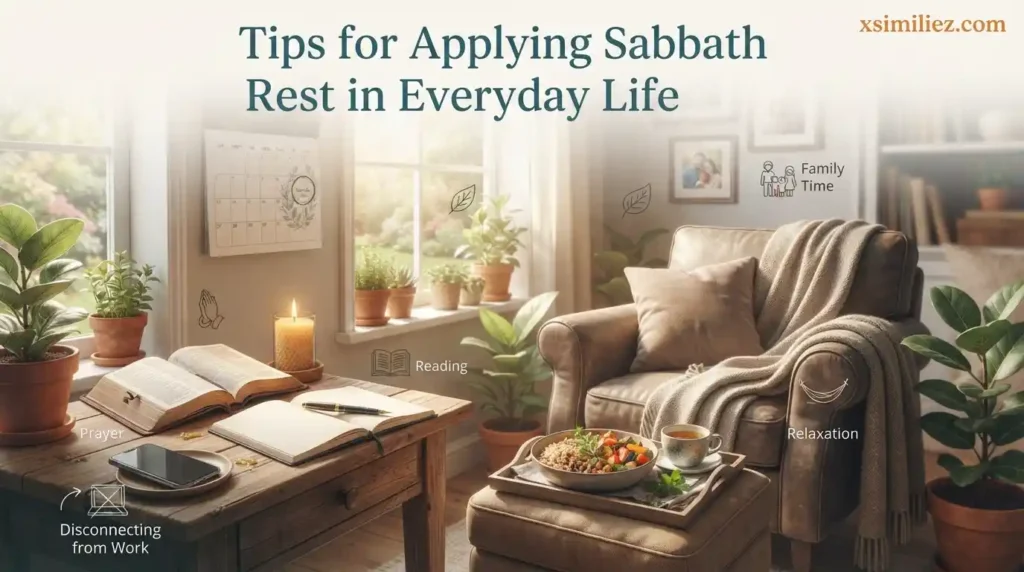
You do not have to be extremely religious to benefit from a Sabbath-style rest day. Here are a few simple ways to bring the idea into daily life.
Pick one day each week, even if it is not Saturday or Sunday, and treat it differently from the rest. Put away work emails and to-do lists for that day. Spend real time with family or close friends instead of screens. Use part of the day for quiet reflection, prayer, or simply being outdoors. Cook a nice meal in advance so you are not stuck working in the kitchen all day. Most importantly, remind yourself that rest is not something you have to earn. It is something built into how humans were designed to live.
FAQs
What does the word Sabbath actually mean?
It comes from the Hebrew word “Shabbat,” which means to stop, cease, or rest from work.
Is the Sabbath Saturday or Sunday?
In the Bible’s original teaching, it is Saturday. Many Christians later moved their main worship day to Sunday to honor the resurrection of Jesus.
Do Christians have to keep the Sabbath today?
This is debated. Many believe the strict Old Testament rules do not directly apply anymore, but the principle of rest and worship still matters.
Why did God rest on the seventh day if He is all-powerful?
The Bible suggests God rested to set an example and to make the day holy, not because He was tired.
What can you not do on the Sabbath, according to the Bible?
Traditional rules included no regular work, no buying or selling, and no requiring servants or animals to work either.
Is a Sabbath the same as a weekend?
Not exactly. A weekend is simply time off, while a Sabbath, in the Bible, includes worship, rest, and spiritual reflection.
Conclusion
The sabbath meaning in Bible teaching is really about two things: rest and remembering. It started with God resting after creation and became a command for His people to follow, a weekly reminder to slow down, worship, and appreciate freedom from constant labor.
Over time, Jewish and Christian traditions shaped the day differently, with some keeping Saturday and others moving to Sunday, but the heart of the idea never changed.
If you follow a religious Sabbath or simply choose to unplug for a day each week, the lesson is timeless: everyone needs rest, and building it into your life on purpose can make a real difference.

Hi, I’m Harper Blake, and I write for Xsimiliez.com. I enjoy sharing clear and friendly simile examples that students and beginners can understand easily. My goal is to make English learning simple and enjoyable.