If you’ve ever heard someone say “papi” in a song, a text message, or a conversation, you might wonder what it actually means. The papi meaning in Spanish is simple: it’s an affectionate word for “dad” or “daddy,” but it’s also used as a warm nickname for a boyfriend, husband, close friend, or even a stranger someone finds attractive. That’s the quick answer, but there’s a lot more to unpack.
People search for this word because it shows up everywhere in music, movies, and social media, and the meaning can shift depending on who’s saying it and to whom. A word that sounds sweet in one context can sound flirty or even inappropriate in another, so understanding the full picture matters.
In this article, you’ll learn the true meaning of “papi,” how it’s used correctly, where it came from, common mistakes people make, and real examples from everyday Spanish. By the end, you’ll know exactly how and when to use this popular word.
Quick Answer: Papi Meaning in Spanish
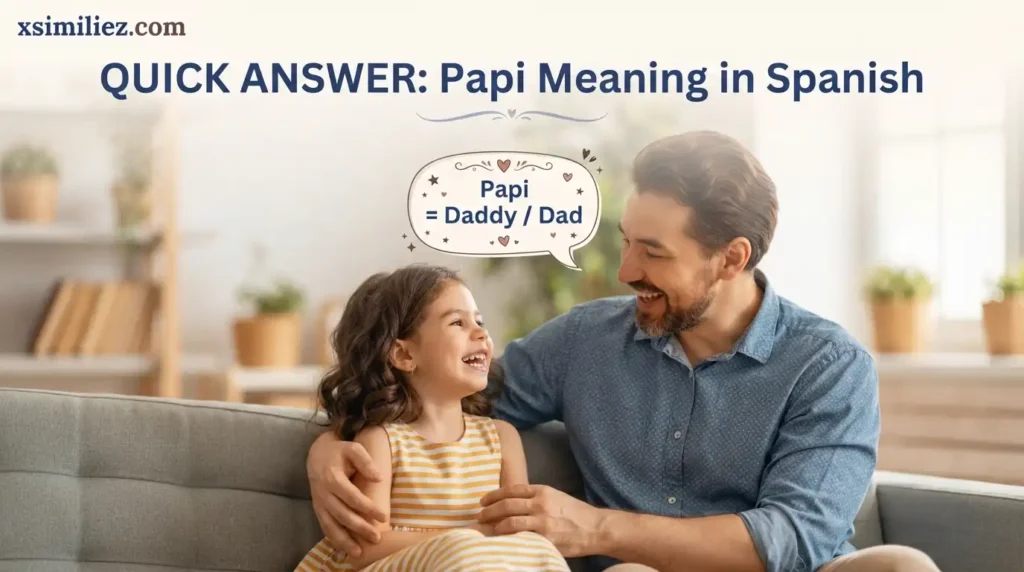
“Papi” is a Spanish word that literally means “daddy,” but in everyday conversation, it works more like a term of endearment. Families use it for a father or grandfather. Friends use it as a casual, friendly nickname. Romantic partners use it to sound sweet or flirty. The exact meaning always depends on the tone, the relationship, and the region where it’s spoken.
Think of it like the English word “babe.” It doesn’t always mean the same thing in every sentence, but the warmth behind it usually stays the same.
Meaning or Definition of Papi
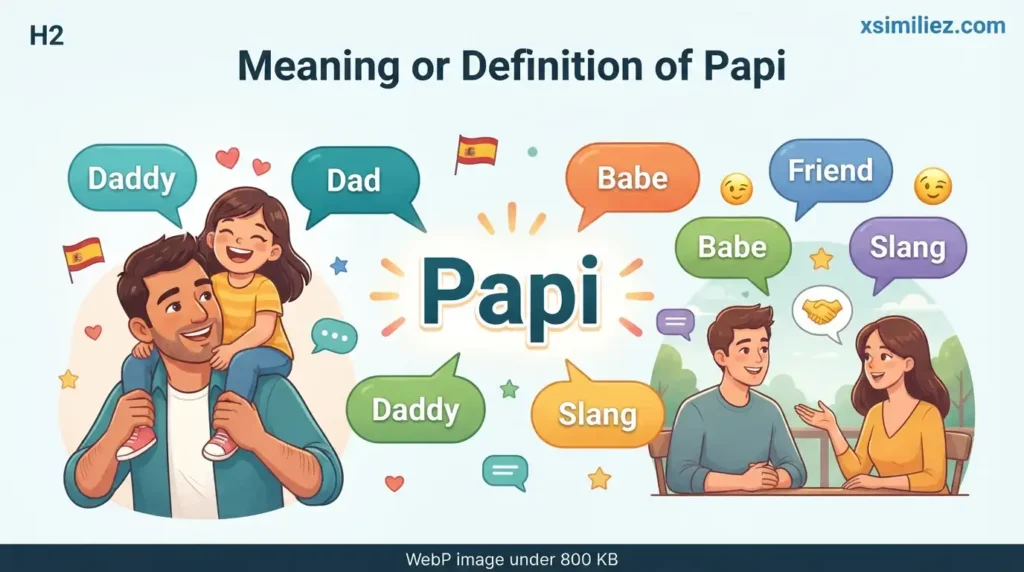
At its core, “papi” comes from the word “papá,” which means “father” in Spanish. Adding the “-i” ending turns it into a cute, informal version, similar to how English speakers turn “dad” into “daddy.”
Here’s a simple breakdown of what “papi” can mean:
| Context | Meaning of “Papi” | Example Use |
| Family | Dad, daddy, father | A child calling their father “papi” |
| Romantic relationships | Babe, honey, sweetheart | A girlfriend calling her boyfriend “papi” |
| Friendly slang | Buddy, dude, pal | Friends greeting each other casually |
| Flirty or admiring tone | Attractive man, “hot guy” | Someone commenting on an attractive stranger |
| Music and pop culture | Stylized term of affection or confidence | Lyrics in reggaeton or Latin pop songs |
As you can see, “papi” isn’t a one-size-fits-all word. Context changes everything, and that’s part of what makes it interesting to learn.
Grammar and Correct Usage of Papi
Grammatically, “papi” is a noun, and it’s considered informal Spanish. It’s not something you’d use in a business email or a formal speech. Instead, it belongs in casual, everyday conversation.
Here are a few grammar notes worth knowing:
Papi is masculine, matching the gender of “papá.” There’s no direct feminine version that means the same thing, though “mami” is the female equivalent, often meaning “mom” or being used as a flirty term for a woman.
It can be used as a direct address, meaning you say it right to the person, like “Hola, papi” (Hi, daddy/buddy). It can also be used to talk about someone, such as “Mi papi me llamó” (My dad called me).
The tone of voice matters a lot in Spanish. Saying “papi” warmly to your father is completely different from saying it playfully to a partner. Non-native speakers sometimes get confused here, so paying attention to context clues, like who is speaking and the relationship between speakers, helps a lot.
Origin and History of Papi
The word “papi” grew out of “papá,” a word used across nearly every Spanish-speaking country. Linguists note that adding “-i” or “-ito” endings to words is a common way Spanish speakers create affectionate nicknames. You see this pattern in other words too, like “mami” from “mamá” or “hermanito” from “hermano” (little brother).
Over time, especially in Caribbean Spanish (Puerto Rico, Dominican Republic, Cuba) and in Latin American pop culture, “papi” expanded beyond its family meaning. It became a flirty or affectionate nickname between romantic partners and eventually crossed into mainstream slang through music, especially reggaeton and Latin trap.
This expansion is similar to how English slang evolves. A word that once meant only one thing picks up new meanings as culture and media spread it further.
Common Mistakes with Papi
Many English speakers and Spanish learners misuse or misunderstand “papi” in a few common ways.
One mistake is assuming it always means something romantic or flirty. In many households across Latin America, children call their fathers “papi” every single day with zero romantic connotation at all.
Another mistake is using it with someone you don’t know well, especially in a professional or formal setting. Because it’s casual and can carry flirty undertones, using “papi” with a coworker or someone you just met might come across as inappropriate or overly familiar.
A third common mistake is confusing “papi” with “papa,” which (without the accent) can mean “potato” in some countries or “Pope” when capitalized as “Papa.” Spelling and accents matter in Spanish, so mixing these up can create confusing or even funny misunderstandings.
Finally, some learners assume “papi” is always positive. While it’s usually affectionate, tone and context can occasionally make it feel disrespectful or overly forward, especially if said to a stranger without any relationship established.
Real-Life Examples of Papi in Use
Seeing “papi” in real sentences makes the meaning much clearer. Below are examples showing different contexts.
| Spanish Sentence | English Meaning | Context |
| “Papi, ¿me ayudas con la tarea?” | “Dad, can you help me with homework?” | Child speaking to father |
| “Te ves guapo hoy, papi.” | “You look handsome today, babe.” | Romantic partner speaking affectionately |
| “¿Qué tal, papi? Todo bien?” | “What’s up, buddy? All good?” | Friends greeting casually |
| “Ese cantante está buenísimo, papi.” | “That singer is so hot.” | Casual, flirty comment among friends |
| “Mi papi trabaja mucho.” | “My dad works a lot.” | Talking about a father figure |
These examples show how flexible the word really is. The same four letters can express family love, romantic affection, or friendly banter, all depending on the situation.
Current Usage and Trends
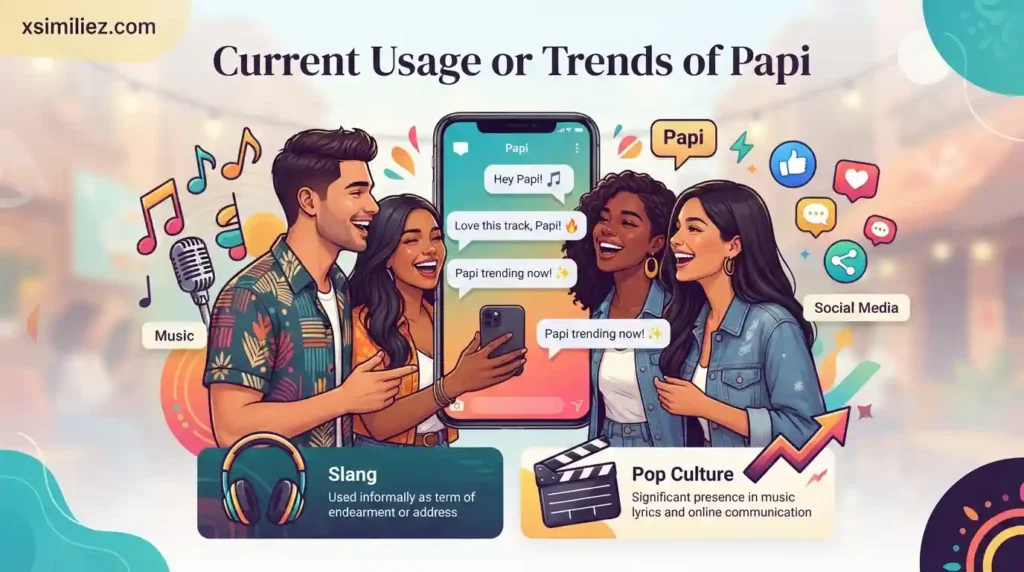
Today, “papi” is extremely common in music, especially reggaeton, Latin trap, and pop songs from artists across Puerto Rico, Colombia, and the Dominican Republic. It’s also widely used on social media, in memes, and in everyday texting among younger generations, both in Spanish-speaking countries and in the U.S. Latino community.
In the United States, many bilingual and Latino communities use “papi” in English conversations too, blending it naturally into everyday speech. You might hear someone say, “Thanks, papi!” the same way they’d say “Thanks, buddy!” This cultural crossover shows how deeply Spanish slang has influenced American pop culture and everyday language.
Because of its popularity in music and media, “papi” has become one of the most recognized Spanish terms of endearment worldwide, even among people who don’t speak Spanish fluently.
Tips for Using Papi Correctly
If you want to use “papi” naturally and respectfully, keep these tips in mind.
Pay attention to your relationship with the person. Family, close friends, and romantic partners are the safest contexts. Avoid using it with strangers, coworkers, or in formal settings, since it can come across as too familiar or flirty. Listen to native speakers, especially in music or shows, to notice tone and context, since hearing it used naturally helps you understand it faster than memorizing a definition. When in doubt, stick to standard words like “papá” (dad) or “amigo” (friend) until you’re confident about the nuances. Remember that regional differences exist. Caribbean Spanish speakers tend to use “papi” more casually and more often than speakers in other Spanish-speaking regions like Spain or Argentina.
FAQs
Does “papi” always mean “daddy” in a romantic way?
No. In most everyday situations, especially within families, “papi” simply means “dad” with no romantic meaning at all.
Is it disrespectful to call someone “papi”?
Not usually, but it depends on context. Using it with close family, friends, or partners is normal and affectionate. Using it with strangers or in formal settings may seem overly familiar.
What’s the difference between “papi” and “papá”?
“Papá” is the standard word for “dad.” “Papi” is a cuter, more casual version, similar to “daddy” in English.
Can women be called “papi” too?
Typically no. “Papi” is used for men or boys. The female equivalent, often used similarly, is “mami.”
Is “papi” used the same way in every Spanish-speaking country?
Not exactly. It’s especially common in Caribbean Spanish (Puerto Rico, Cuba, Dominican Republic) and Latin American pop culture, though it’s understood almost everywhere.
Why do I hear “papi” so often in Spanish music?
Many reggaeton and Latin pop artists use “papi” as a stylish, affectionate, or confident term, which has made it extremely popular in mainstream music and culture.
Conclusion
Understanding the papi meaning in Spanish really comes down to context. It can mean “dad,” a sweet nickname for a partner, or a casual term between friends. The word carries warmth in almost every situation, but its exact meaning shifts depending on who’s speaking and their relationship.
The key takeaway is simple: listen to the tone, notice the relationship between speakers, and don’t assume every use is romantic. Spanish, like any language, relies heavily on context, and “papi” is one of the best examples of that flexibility.
If you’re learning Spanish or simply curious about the words you hear in songs and conversations, paying attention to real-life usage will teach you far more than a textbook definition ever could. Keep listening, keep asking questions, and you’ll pick up these nuances naturally over time.

Hi, I’m Mason Avery, a content writer at Xsimiliez.com. I like writing about similes, figurative language, and creative expressions. I believe learning English becomes easier when examples feel natural and relatable.