The phrase “my brother’s keeper” means being responsible for the safety, well-being, and care of another person, especially someone in need. It comes from an old Bible story, but today people use it to talk about kindness, duty, and looking out for others’ family or not.
Maybe you heard this phrase in a movie, a song, a sermon, or a news story. Maybe a friend said it and you weren’t sure exactly what it meant. That’s normal. This phrase sounds simple, but it carries a deep history and a message that has changed over thousands of years.
In this article, you will learn where the phrase comes from, what it truly means today, how people use it in daily life, and why it still matters so much. By the end, you’ll be able to use this phrase correctly and understand it whenever you hear it again.
Quick Answer: My Brother’s Keeper Meaning
If you only want the short answer, here it is: “my brother’s keeper“ means taking care of someone else, protecting them, and feeling responsible for their safety and happiness. It is often used to remind people that we should help and watch out for one another, not just ourselves.
The phrase can apply to an actual brother or sister. But most of the time, people use it in a bigger way. It can mean helping a neighbor, a stranger, a coworker, or anyone who needs support. It is a phrase about human kindness and shared responsibility.
Meaning or Definition of My Brother’s Keeper
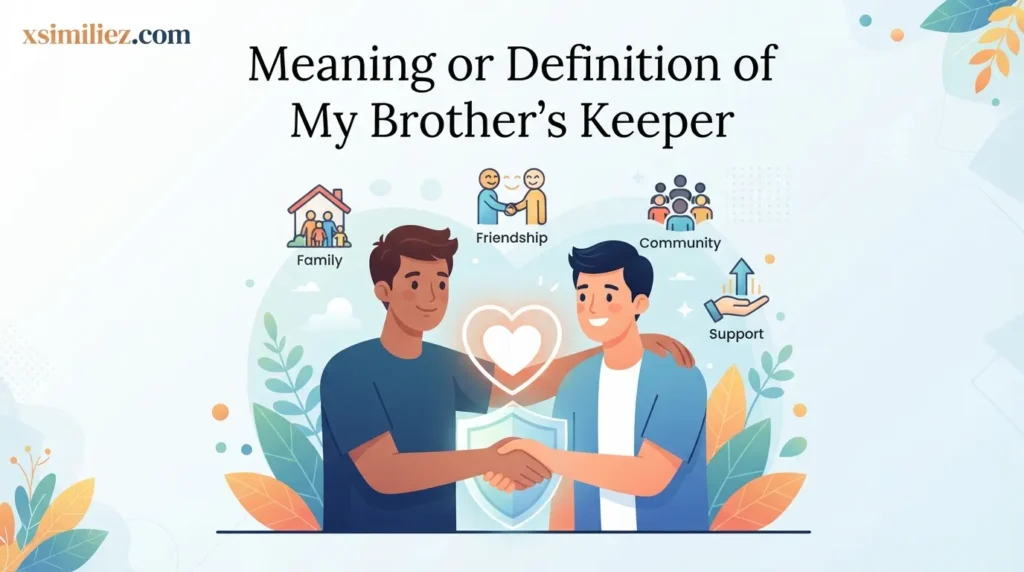
At its core, “my brother’s keeper” is about responsibility for others. When someone says, “I am my brother’s keeper,” they are saying they care about what happens to another person. They are saying they won’t ignore someone’s pain or needs.
The word “keeper” is important here. A keeper watches over something. A zookeeper watches over animals. A shopkeeper watches over a store. So a “brother’s keeper” is someone who watches over another person’s safety and well-being.
Here is a simple breakdown of the phrase:
| Word | Simple Meaning |
| My | Belonging to me; something I take on |
| Brother | A fellow person, not always a blood relative |
| Keeper | Someone who protects, watches, or cares for something |
When you put these together, the phrase becomes a promise: I will care about you. I will not turn away.
People often say this phrase when they talk about:
- Supporting people facing poverty or homelessness
- Supporting a friend going through hard times
- Building stronger communities
- Standing up for someone being treated unfairly
- Teaching kindness and shared responsibility
This phrase is used in speeches, sermons, songs, and even government programs, because it captures something every culture values: the idea that we are connected to each other.
Origin or History of My Brother’s Keeper
This phrase comes from the Bible, in the Book of Genesis, chapter 4. It appears in the story of Cain and Abel, the first two sons of Adam and Eve.
According to the story, Cain became angry and jealous of his brother Abel. Cain ended up killing Abel out in a field. Afterward, God asked Cain, “Where is Abel your brother?” Cain answered with a question of his own: “Am I my brother’s keeper?”
This answer was not honest or caring. Cain was trying to avoid blame. He was pretending he had no duty to know or care where his brother was. It was a way of dodging responsibility, right after doing something terrible.
Here’s the interesting twist. Over many centuries, the meaning of this phrase changed. Cain used it to deny responsibility. But people today use “my brother’s keeper” to accept responsibility. It flipped from an excuse into a promise.
This shift happened slowly, through religious teaching, literature, and public speeches. Preachers used the story to teach that we should care for each other, unlike Cain. Writers and leaders picked up the phrase to inspire people toward kindness and unity.
One well-known modern example is the “My Brother’s Keeper” initiative, started in the United States in 2014. It was a program designed to help boys and young men, especially from communities that face extra challenges, get better chances in life through mentorship and support. This program helped bring the phrase back into common conversation, though it is only one example of many.
Common Mistakes with My Brother’s Keeper
Even a phrase this old can be misunderstood. Here are common mistakes people make.
| Mistake | Why It’s Wrong | Correct Understanding |
| Thinking it only applies to real brothers | The phrase is symbolic, not literal | It applies to any person, not just family |
| Believing Cain said it with pride | Cain said it to avoid blame | The phrase started as a denial, not a promise |
| Using it only in religious talk | It’s now used in daily language, media, and politics | It fits many settings, not just church |
| Assuming it means controlling someone | “Keeper” means caring, not controlling | It’s about protection, not power |
| Thinking it’s outdated | It’s still widely used today | The phrase remains popular in speeches and writing |
One more common slip-up is grammar-related. People sometimes write “my brothers keeper” without the apostrophe. The correct form always includes the apostrophe: brother’s, because the keeper belongs to, or is responsible for, the brother.
Real-Life Examples of My Brother’s Keeper
Seeing the phrase in real situations helps make the meaning clear. Here are some everyday examples:
A teacher notices a student who seems sad and alone at lunch. Instead of ignoring it, she sits with the student and checks in. She is acting like her brother’s keeper, even though they aren’t related.
A man sees his older neighbor struggling to carry groceries. He stops what he’s doing and helps carry the bags inside. That small act reflects the same spirit.
In sports, a team captain notices a teammate is struggling emotionally after a tough loss. Instead of criticizing him, the captain offers encouragement and support. This is another version of being someone’s keeper.
In communities, volunteers who deliver food to older or sick people often say they feel like they are being their brother’s keeper, even if they’ve never met the person before.
You can also find the phrase in music, movies, and books, where characters choose to protect or stand up for someone weaker or in danger. Writers often use this phrase to highlight loyalty, morality, and human connection.
Current Usage or Trends of My Brother’s Keeper
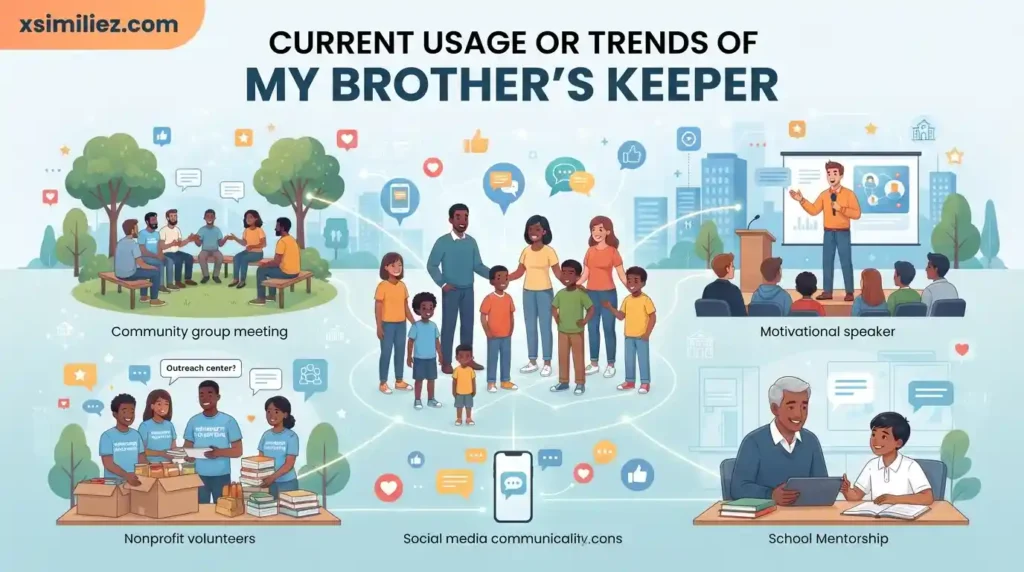
Today, “my brother’s keeper” is used in many parts of life, not just religion. You’ll find it in:
- Motivational speeches about kindness and leadership
- Nonprofit organizations focused on mentorship or community support
- Political and social discussions about equality and shared responsibility
- Song lyrics and movie titles
- Everyday conversations about helping others
Because the phrase carries a strong emotional meaning, brands, schools, and community groups often use it in their mission statements. It signals unity, care, and moral duty.
Social media has also helped keep the phrase alive. People often share posts encouraging others to “be someone’s keeper” during hard times, natural disasters, or personal struggles. It has become a shorthand for compassion in a fast-moving digital world.
Tips or Best Practices for Using My Brother’s Keeper
If you want to use this phrase correctly and naturally, keep these tips in mind:
Use it when talking about care, protection, or responsibility for someone else’s well-being. It fits well in speeches, essays, or conversations about kindness.
Avoid using it to describe control or ownership over another person. The phrase is about support, not authority.
Remember the correct spelling: brother’s, with an apostrophe before the “s.”
You can also adapt the phrase depending on gender or context, such as “my sister’s keeper,” which is used the same way. In fact, there’s even a well-known novel and film titled My Sister’s Keeper, showing how flexible and lasting this phrase has become.
When writing or speaking, pair the phrase with real actions. Saying “I am my brother’s keeper” means more when followed by something like volunteering, mentoring, or simply checking on a friend.
FAQs
What does “my brother’s keeper” mean in simple words?
It means being responsible for taking care of another person, watching out for their safety and needs.
Where does the phrase “my brother’s keeper” come from?
It comes from the Bible story of Cain and Abel in Genesis 4, where Cain says, “Am I my brother’s keeper?” after avoiding responsibility for his brother.
Did Cain mean it in a caring way?
No. Cain used the phrase to deny responsibility, not to express care. The meaning changed to a positive one over time.
Can the phrase apply to people who aren’t real brothers?
Yes. It’s often used to describe caring for any person, including friends, neighbors, or strangers.
Is “my sister’s keeper” the same idea?
Yes, it carries the same meaning but is used for female relationships or characters, as seen in the novel and movie My Sister’s Keeper.
Why is this phrase still popular today?
Because it captures a timeless message about kindness, responsibility, and human connection, which still matters in modern life.
Conclusion
The phrase “my brother’s keeper” carries a powerful message that has lasted for thousands of years. What began as an excuse from Cain in the Bible turned into one of the most meaningful reminders about human kindness and responsibility. Today, it reminds us that caring for others isn’t optional, it’s part of being a good person.
If you use it in writing, speeches, or daily conversations, the phrase encourages you to notice people around you who might need help. It could be a neighbor, a coworker, a friend, or even a stranger. Being someone’s keeper means choosing compassion over indifference.
The next time you hear or read “my brother’s keeper,” you’ll understand its full meaning and history. More importantly, you might feel encouraged to become that kind of person yourself, someone who looks out for others, offers help without being asked, and builds a little more kindness into the world.

Hi, I’m Harper Blake, and I write for Xsimiliez.com. I enjoy sharing clear and friendly simile examples that students and beginners can understand easily. My goal is to make English learning simple and enjoyable.