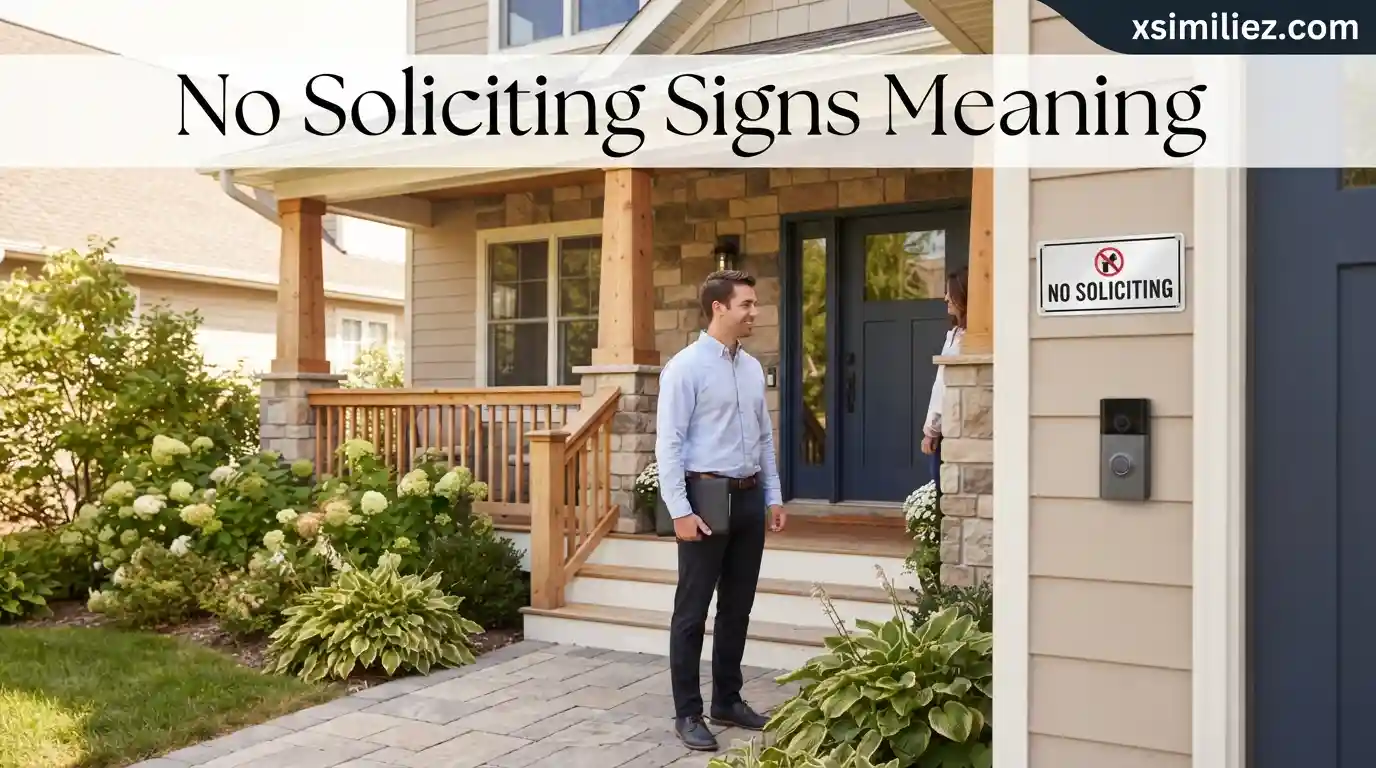
No soliciting signs meaning is simple. The sign tells visitors not to knock, ring the bell, or come to the door to sell things or ask for money. It says the homeowner does not want uninvited sales pitches. But the sign is mainly a polite warning, and how much legal power it has depends on where you live.
Maybe you saw one on a front door and wondered if it covers a kid selling candy or a neighbor with a flyer. Or maybe you want to hang one and wonder if it really works. Many people search this topic because the rules feel fuzzy, and the fuzz is real.
In this guide, you will learn what the sign means, who it stops, and who it may not stop. You will also see the law in plain words, common mistakes, real examples, and tips for making a sign that gets results.
Quick Answer: No Soliciting Signs Meaning in One Minute
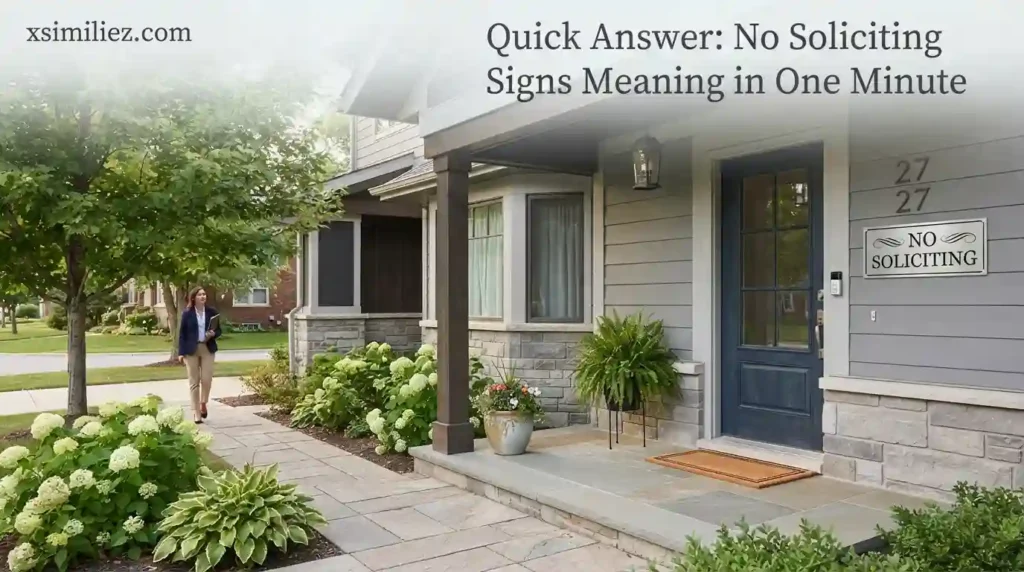
A no soliciting sign is a message from a property owner. It says, “Please do not come to my door to sell or ask for something.” You often see it near a front door, a gate, or the entrance to a building or neighborhood.
The sign is a request, and in many places it also gives legal notice. Once a person sees it, they are expected to respect it. Most honest businesses do.
If a person ignores the sign and stays after you ask them to leave, that can become trespassing. But the exact rules change from city to city and state to state. Some groups, like political and religious visitors, have special free speech protection. We will cover that below.
What a No Soliciting Sign Really Says
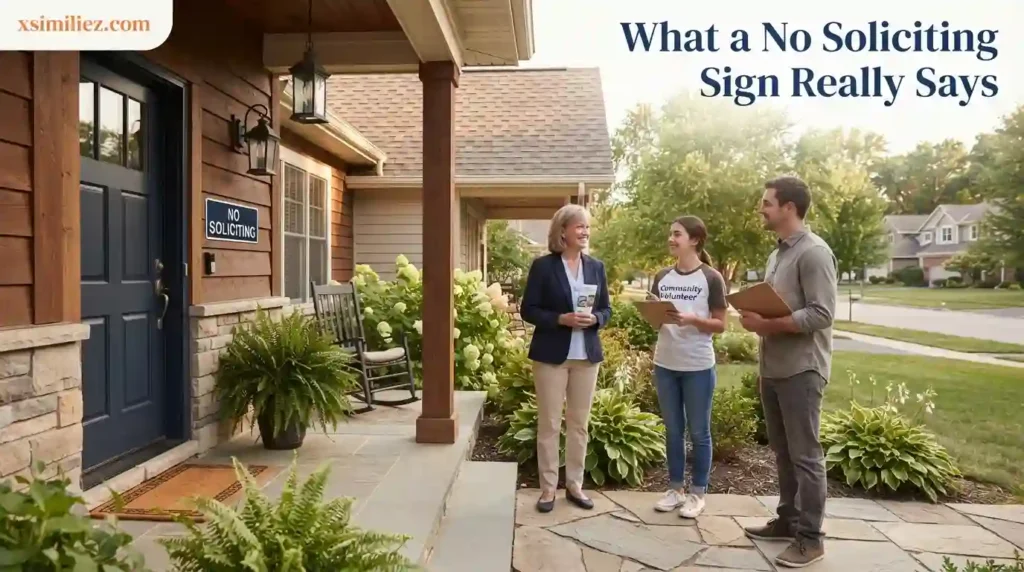
“Solicit” is a big word for a simple act. It means to ask for something. When someone solicits at your door, they come without being invited to ask for money, a sale, a vote, a signature, or your time.
Think about who might do this. A roofing crew might offer to fix your roof. A solar company might ask to talk about panels. A worker might be raising money for a cause. Someone might ask you to sign a petition. Each of these is a type of soliciting.
The heart of the sign is privacy. Your home is where you rest, eat dinner, work from a laptop, or take a nap after a night shift. Many people simply do not want the doorbell to ring for a sales pitch. The sign lets you say that without saying a word.
There is also a safety side. Some door-to-door visitors are honest, and some are not. A sign helps you set a clear rule for your home before anyone shows up.
Who the Sign Covers and Who It Does Not
People often assume the sign stops every person who walks up to the door. It does not. Some visitors are clearly covered, some are in a gray area, and some are not covered at all. This table shows the usual picture, though local rules can change it.
| Type of visitor | Covered by the sign? | Notes |
| Door-to-door salespeople (solar, roofing, pest control, alarms) | Yes | This is the main group the sign is made for |
| Magazine, knife, or cleaning product sellers | Yes | Clearly selling something |
| Charity fundraisers | Usually yes | Some cities have special rules for charities |
| Kids selling candy or cookies for a group | Usually yes | Many homeowners make their own exceptions |
| Political canvassers | Often a gray area | Free speech rules may protect them, but you can still ask them to leave |
| Religious visitors | Often a gray area | Same as above |
| Mail carriers and delivery drivers | No | They are not selling anything |
| Utility workers, police, census workers | No | They have official reasons to visit |
| Friends, family, and neighbors | No | They are guests, not sellers |
| A repair person you called | No | You invited them |
The big idea is this. The sign is aimed at uninvited people who want something from you. Anyone with an invitation, a delivery, or an official job is a different story.
Are No Soliciting Signs Legal Rules in the USA?
This is the part most people get wrong. A no soliciting sign is not always a law by itself. It is a notice, and how strong that notice is depends on the place.
Start with the basics. Your home is private property. In the United States, visitors are generally allowed to walk up to a front door, knock, wait a short time, and leave. Courts have called this an “implied license,” which means a kind of quiet, built-in permission. But that permission can be taken away. A clear sign at the door is one way to do it, and telling a person directly to leave is another.
Once a visitor knows you do not want them there, staying can become trespassing. That is why many police departments say a sign, plus a clear request to leave, gives you a stronger position.
Now for the twist. The First Amendment protects free speech, and courts have applied it to door-to-door talking. In 2002, the U.S. Supreme Court ruled in a case about Jehovah’s Witnesses that a village could not force people to get a permit before sharing religious or political messages door to door. So cities have less power over political, religious, and other speech-based visits than they have over sales visits.
Sales are treated differently. Cities can make rules for people who sell at your door. Many cities require a permit or license for door-to-door sellers. Some make it a crime to ignore a posted no soliciting sign. These rules are often called Green River ordinances, after an early example from Green River, Wyoming. Others keep “do not knock” lists that homeowners can join.
There is one more helpful rule. The Federal Trade Commission has a “Cooling-Off Rule.” It gives you three days to cancel most sales of $25 or more that are made at your home. So even if a seller gets past your sign, you may have a way out.
Please remember that this is general information, not legal advice. Your city code is the best place to check what applies to you.
A Short Look at Where the Sign Came From
The exact first no soliciting sign is not well documented, so it is hard to name a date or a person. Still, the story around it is clear enough.
In the early 1900s, door-to-door selling was common in America. Brush sellers, encyclopedia agents, and vacuum cleaner salesmen went from house to house. Many were honest. Some pushed hard, and some tricked people. Towns began passing rules about who could knock on doors and when.
The Green River, Wyoming rule from the 1930s became a famous example, and many towns copied the idea. Over time, courts sorted out what cities could and could not control. Homeowners, meanwhile, found their own simple tool, which was a small sign by the door.
Today the sign is a normal part of neighborhood life. You can buy one at a hardware store, print one at home, or order a fancy metal one online.
Common Mistakes People Make With No Soliciting Signs
Many signs fail, and it is usually not the fault of the law. It is the fault of the sign or how it is used. The table below shows the most common problems and easy fixes.
| Common mistake | Why it causes trouble | Simple fix |
| Sign is too small or faded | Visitors cannot read it, so they knock anyway | Use bold letters and replace old signs |
| Sign is hidden behind a plant or door | Nobody sees it | Hang it at eye level near the doorbell |
| Sign is placed only on the mailbox | Some visitors go straight to the door | Put one at the door and one at the gate |
| Wording is unclear | Visitors are unsure what it means | Use plain words like “No Soliciting” |
| Rude or angry wording | It can upset people and may anger neighbors | Keep the tone firm and polite |
| No follow-up when ignored | The sign alone may not end the visit | Calmly tell the person to leave |
| Expecting it to stop everyone | Delivery workers and guests are not covered | Add notes for special cases if needed |
| Ignoring HOA or landlord rules | You could break a community rule | Ask before you hang a sign |
Another big mistake is thinking the sign gives you power to argue. It does not. If someone ignores it, stay calm. Do not yell or block their path. Tell them clearly to leave your property, and if they will not go, call your local non-emergency police number.
Real-Life Examples of How the Sign Works
Examples make the rules easier to picture. Here are a few common situations.
Imagine a man knocks on your door to sell solar panels. You have a sign, but he says he did not see it. This is common. You can say, “Please leave. There is a sign.” A polite company will thank you and go. If he keeps talking, he is now ignoring a direct request, and that can become trespassing.
Now picture two kids from down the street selling cookies for their school. The sign says no soliciting, and they knocked anyway. Legally they may be in the same boat as any other seller, but many homeowners are happy to buy. That is your choice. If you never want visits like this, you can add a line to your sign about kids’ fundraisers.
Next, think of a volunteer asking you to sign a petition or talk about an election. This is different from a sale. Many courts protect this kind of speech, so a sign does not always stop them. But they still should leave if you ask them to. You can say, “No, thank you,” and close the door.
Finally, a package arrives. The delivery driver walks right up to your porch even with the sign. That is normal. The sign is not meant for deliveries, and no reasonable person would think so.
Current Trends: Doorbell Cameras, Scams, and Smart Signs
Times have changed since the first signs. Today, many homes have video doorbells. A camera can show you who is outside before you open the door. This has made it easier to skip unwanted visitors, and some people now use a doorbell camera and a sign together.
Online neighborhood apps have also made people more aware of door-knocking scams. Some scammers pretend to work for a utility company or a home security firm. A sign can help you keep a firm rule, which is that you do not talk to sellers at the door.
Some cities now offer “do not knock” registries or door hangers that residents can request. Others post rules on their websites about which groups need a permit. If you live in an HOA, your community may already have its own rules or standard signs.
Signs themselves have also changed. You can now find them in metal, plastic, and even stickers made for doorbell cameras. Some add short lines like “No sales, no flyers, no surveys” to make the message very clear.
Tips for Using a No Soliciting Sign the Right Way
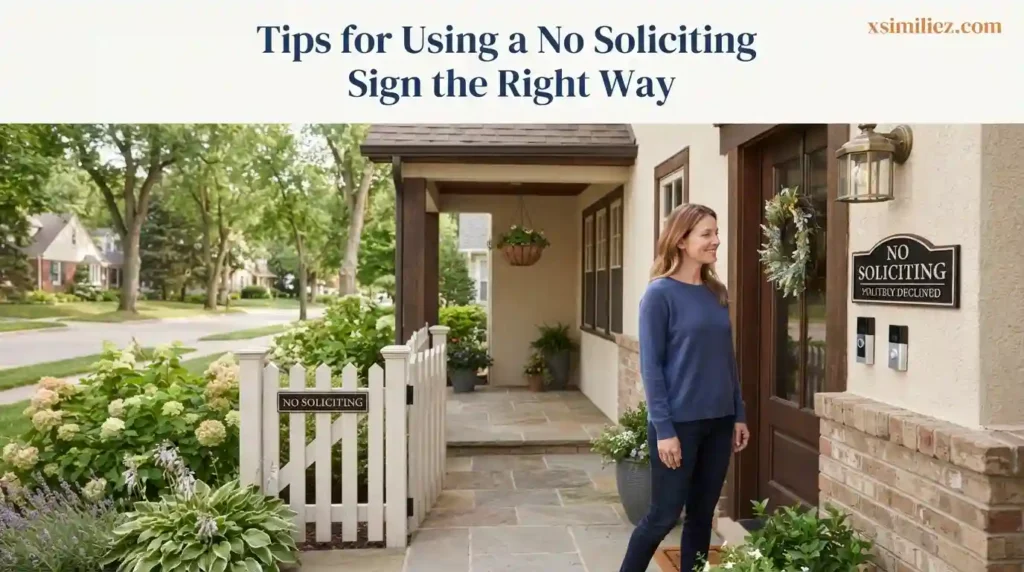
A good sign is clear, easy to see, and polite. Here are practical ways to make yours work better.
First, keep the wording plain. The best signs are short, and the table below shows a few options for different needs.
| Sign wording | Best for | Tone |
| “No Soliciting” | Most homes | Simple and neutral |
| “No Soliciting or Sales, Thank You” | Friendly homes | Polite and soft |
| “No Soliciting. No Exceptions.” | Homes that want a firm rule | Strong |
| “No Soliciting, Flyers, or Surveys” | Homes tired of many visitors | Specific and clear |
| “Please Do Not Knock. Baby Sleeping.” | Homes with a newborn | Personal and gentle |
Second, place the sign well. Put it near the doorbell at eye level. If your home has a gate, add a second sign there. Make sure porch lights shine on it at night.
Third, know your local rules. Look up your city’s code on soliciting and permits. Some cities have a simple online page. It can also help to know if your HOA or landlord has rules about signs.
Fourth, be ready for what happens next. If someone ignores your sign, stay calm and say, “Please leave my property.” Do not argue. Write down the time and what was said if you feel unsafe, and call the non-emergency police line if needed.
Fifth, think about exceptions. If you want to welcome certain visitors, like school fundraisers or neighbors, decide that in advance. A sign works best when you follow your own rule.
FAQs
What does a no soliciting sign mean?
It means the owner does not want uninvited people coming to the door to sell products, ask for donations, or request signatures. It is a clear “please do not disturb” message for sales and similar visits.
Is a no soliciting sign legally enforceable?
It depends on where you live. In many places, the sign gives notice, and staying after being told to leave can be trespassing. Some cities also have laws that make ignoring the sign a violation. Check your local code for the exact rules.
Does the sign stop political or religious visitors?
Not always. Courts have protected door-to-door speech about political and religious topics. The sign is still a request, though, and you can politely ask any visitor to leave.
Does the sign apply to kids selling cookies or candy?
Usually, yes, since they are asking for a sale. Many people choose to make exceptions, though. If you never want those visits, you can add a note to the sign.
What should I do if someone ignores my sign?
Stay calm and tell them clearly to leave your property. Do not argue or block their way. If they refuse to go or you feel unsafe, call your local non-emergency police number.
Where is the best place to put a no soliciting sign?
Put it at eye level near the front doorbell so it is easy to see. If you have a gate or a long driveway, add a second sign there. Check first if you rent or live in an HOA.
Conclusion
The no soliciting signs meaning comes down to one simple idea. The sign asks uninvited sellers and fundraisers to stay away from your door. It protects your privacy, your time, and your peace at home. It is not a magic shield, but it is a clear and polite message.
The details matter too. The sign does not stop deliveries, guests, or officials. It may not fully stop political or religious visitors, since free speech rules apply. And its legal strength depends on local laws, so it pays to check your city’s rules.
If you want a sign that works, keep it clear, place it where people can see it, and be ready to speak up if someone ignores it. Stay calm and firm, and never argue at the door. With a good sign and a simple plan, most unwanted visits will stop before they start.

Hi, I’m Mason Avery, a content writer at Xsimiliez.com. I like writing about similes, figurative language, and creative expressions. I believe learning English becomes easier when examples feel natural and relatable.