CMP in text most often means “Call Me Please.” If someone sends you “CMP,” they want you to phone them soon. That is the short answer to the cmp meaning in text. But this tiny abbreviation can mean other things too, depending on who sends it.
You may have seen it in a message from a friend, a family member, or even a stranger. It looks small, yet it can leave you confused. Should you call right away? Is it a code? Is it a typo? Many people search for this answer every day because those three letters fit more than one idea.
In this guide, you will learn the main meaning, the other meanings, real examples, common mistakes, and simple tips for replying. By the end, you will know how to read CMP in any chat with confidence.
Quick Answer: CMP Meaning in Text
The cmp meaning in the text is “Call Me Please.” People use it when they want a quick phone call instead of a long text chat. It is polite, short, and easy to type.
Here is the simple rule. If the message comes from someone you know, and it is only the letters CMP, it almost always means “Call Me Please.” If the chat is about money, health, work, or computers, the letters may stand for something else.
What Does CMP Mean in a Text Message?
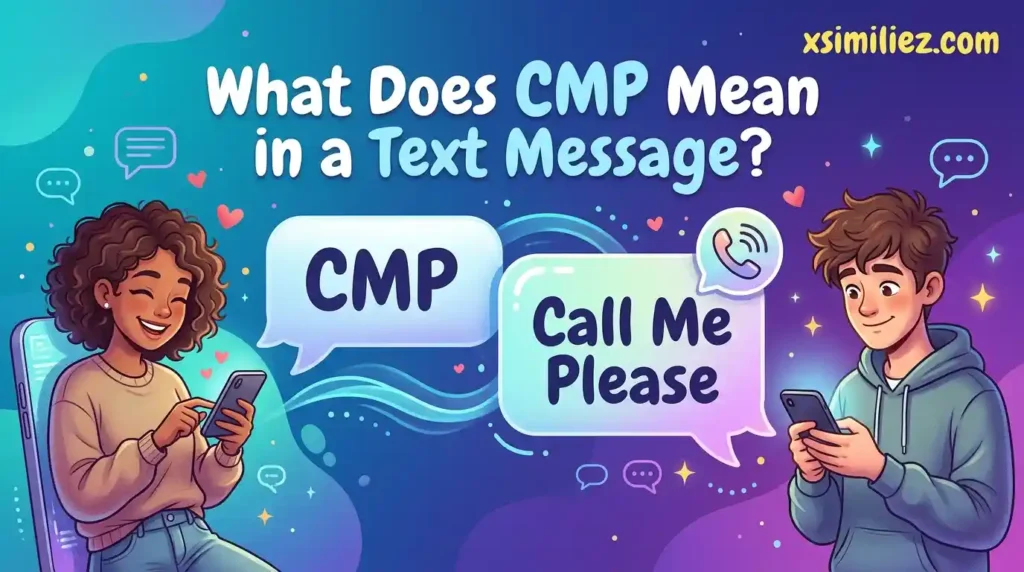
When people text, they like to save time. Instead of typing “Please call me when you get a chance,” they type “CMP.” It saves effort, and it still sounds kind because of the word “please.”
Think about why someone would send this message. Maybe they have big news. Maybe the topic is too long to type. Maybe they feel nervous and want to hear your voice. Maybe their phone has low battery, and a short call is easier. In all of these cases, CMP gets the job done fast.
The word “please” matters here. It makes the message softer than a plain “Call me.” That is why many people feel CMP sounds friendly, not bossy. Still, tone can change from person to person. A friend who sends “CMP” with a smiley face is probably relaxed. A boss who sends “CMP” late at night might need something urgent.
It also helps to know that CMP is informal. You will see it mostly in personal chats, social media messages, and quick notes between people who know each other well. It is not a word you will find in a school paper or a business letter.
How to Use CMP the Right Way
Using CMP is easy, but a few small habits will help your message land well. First, use it only with people who will understand it. If you text your grandmother “CMP,” she may think you made a typing error. A full sentence is kinder in that case.
Second, you can write it in capital letters or small letters. Both “CMP” and “cmp” are common in texts. Capital letters can look a little stronger. Small letters often feel more casual.
Third, add a short hint if the call is important. For example, “CMP, it’s about dinner” tells the other person there is no emergency. Or write “CMP when free.” That small extra phrase saves the reader from worry.
Here are a few simple ways people write it:
CMP when you can. CMP, I have news. Please CMP after work. CMP asap.
Keep in mind that CMP works as a short request, like a command with good manners. It is not a full sentence on its own, and you do not need a period after it. If you are unsure the reader will know it, spell it out the first time. After that, the short version works fine.
Is There a Known Origin for CMP in Text?
Many readers ask where CMP came from. The honest answer is that there is no clear, proven origin for this texting use. Nobody has shown who typed it first or when it began.
What we do know is how texting slang usually grows. Early mobile phones limited how many letters you could type in one message, so people shortened phrases. Letters from each main word made quick codes. “Call Me Please” became CMP in the same way that “Talk To You Later” became TTYL. Some phone networks around the world also offer a “please call me” message feature, which may have made the idea more common.
Still, that is the general pattern, not a confirmed history of this exact abbreviation. It is better to say that the origin is unclear than to make up a story. What matters most today is how people use it, and that is simple enough to learn.
Other Meanings of CMP You Might See
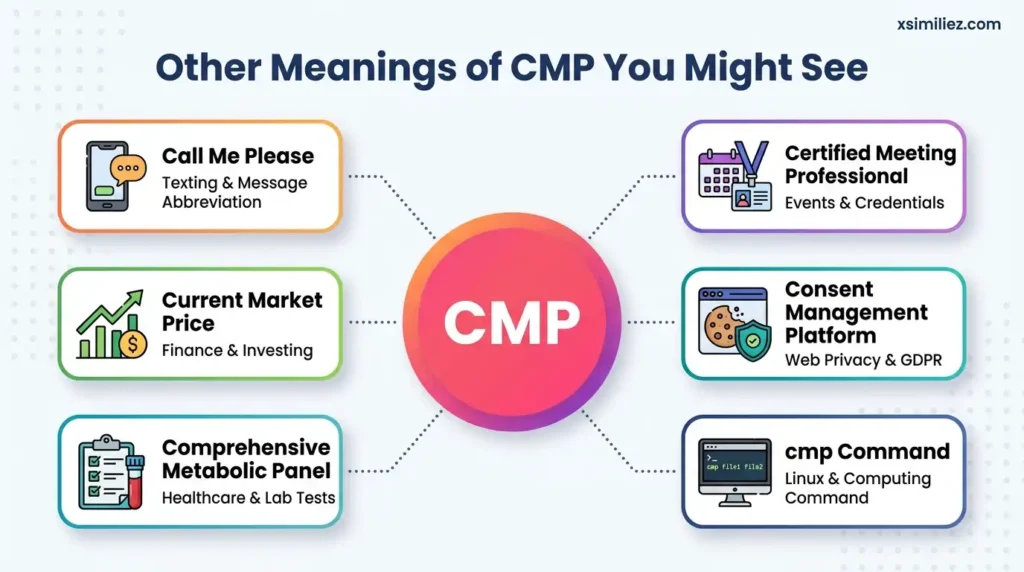
The same three letters appear in many fields. That is why context matters so much. Before you reply, look at who sent the message and what you were talking about just before it.
| Meaning | Where You May See It | Example |
| Call Me Please | Personal texts and chats | “CMP, I need your advice.” |
| Current Market Price | Stock market and trading talk | “Bought at 120, CMP is 135.” |
| Comprehensive Metabolic Panel | Health and blood tests | “My doctor ordered a CMP.” |
| Certified Meeting Professional | Event and work settings | “She earned her CMP this year.” |
| Consent Management Platform | Websites and online privacy tools | “Our site uses a CMP for cookies.” |
| cmp (command) | Computer coding and Linux tools | “Use cmp to compare two files.” |
As you can see, the texting meaning is just one of several. The finance meaning, “Current Market Price,” is common in stock chats, especially in groups that share trading tips. The medical meaning is a standard blood test that checks things like blood sugar and kidney health. The tech meaning comes from a command that compares files.
So how do you pick the right one? Look for clues. If a friend sends only “CMP” with no other words, think “Call Me Please.” If a group chat is full of stock prices, think “Current Market Price.” If a nurse or clinic mentions it, think of a blood test. When nothing fits, ask. Asking is far better than guessing wrong.
Common Mistakes People Make With CMP in Text
Even a short word can cause trouble. Here are the mistakes people make most often, and how to avoid them.
The first mistake is assuming CMP always means “Call Me Please.” It usually happens in personal chats, but not always. If the message comes from a stranger, a company, or a work group, check the topic before you pick up the phone.
The second mistake is replying with a long text when the person wanted a call. If someone sends CMP, they probably want to talk out loud. A quick reply like “Calling you now” or “Can’t talk, call you at 6?” is much better than a long paragraph.
The third mistake is using CMP with people who may not know it. Older family members, new coworkers, or customers may not understand slang. If you want a clear message, write the full words.
The fourth mistake is feeling worried right away. Many people see CMP and think something bad happened. Most of the time, the sender just wants to chat. Take a breath, read the tone, and then respond.
The fifth mistake is using it in a formal message. A job email or a note to a teacher should have full sentences. CMP belongs in friendly, casual texts only.
The last mistake is ignoring it. If you cannot call back, say so. A short reply shows respect and keeps the other person from waiting and wondering.
Real-Life Examples of CMP in Text
Seeing the word in action makes it easier to remember. Below are some everyday chats and what they most likely mean.
| Text You Receive | Likely Meaning | Good Reply |
| “CMP” from your best friend | Call Me Please | “Sure, calling in five” |
| “cmp when ur free” from a cousin | Call Me Please | “Will do after lunch.” |
| “CMP is 250 now” in a stock group | Current Market Price | “Thanks, I’ll check the chart.” |
| “Your CMP results are ready” from a clinic | Comprehensive Metabolic Panel | “Thank you, I’ll call the office.” |
| “Please CMP” from your mom | Call Me Please | “On my way to the phone, Mom.” |
Here is a longer example. Imagine Sara is at the grocery store when she gets a text from her sister Mia. It says, “CMP, it’s about Saturday.” Sara knows Mia well, so she understands. She sends back, “Almost done shopping, I’ll call in 10.” Mia replies with a thumbs up. The whole thing took less than a minute, and no one was confused.
Now picture a different case. Jake is in a stock tips group chat. Someone wrote, “Buy near CMP.” Jake knows this group talks about shares, so he reads it as “Buy near the Current Market Price.” If he thought it meant “Call Me Please,” he would be lost. This shows why context is the key to the whole puzzle.
How People Use CMP Today
Texting slang changes all the time. Some terms fade away, and others stay. CMP has stayed useful because it is short and has a clear job: asking for a phone call.
Today, many people use messaging apps more than regular texts. In those apps, people can send voice notes or start a video call in one tap. Because of this, some people now type “call me” or “VC me” instead of CMP. Even so, the abbreviation still shows up in everyday chats, especially in regions and groups where it is already a habit.
CMP also lives in other worlds. The finance meaning stays strong in trading chats. The health meaning stays common in clinics and lab reports. So when you search for the cmp meaning in text, you will find a mix of answers. That is normal, and it just means the letters are shared by many fields.
Here is a quick comparison with other short phrases that ask for a call or a pause in the chat:
| Abbreviation | Meaning | Best Used When |
| CMP | Call Me Please | You want a polite request for a call |
| CMB | Call Me Back | You missed a call and want a return call |
| PCM | Please Call Me | Same idea as CMP, in a different order |
| TTYL | Talk To You Later | You are ending a chat for now |
| BRB | Be Right Back | You are stepping away for a moment |
Each one has its own feel. CMP stands out because it is both short and polite, which is why it stays popular with people who like quick, kind messages.
Tips for Replying to CMP in Text
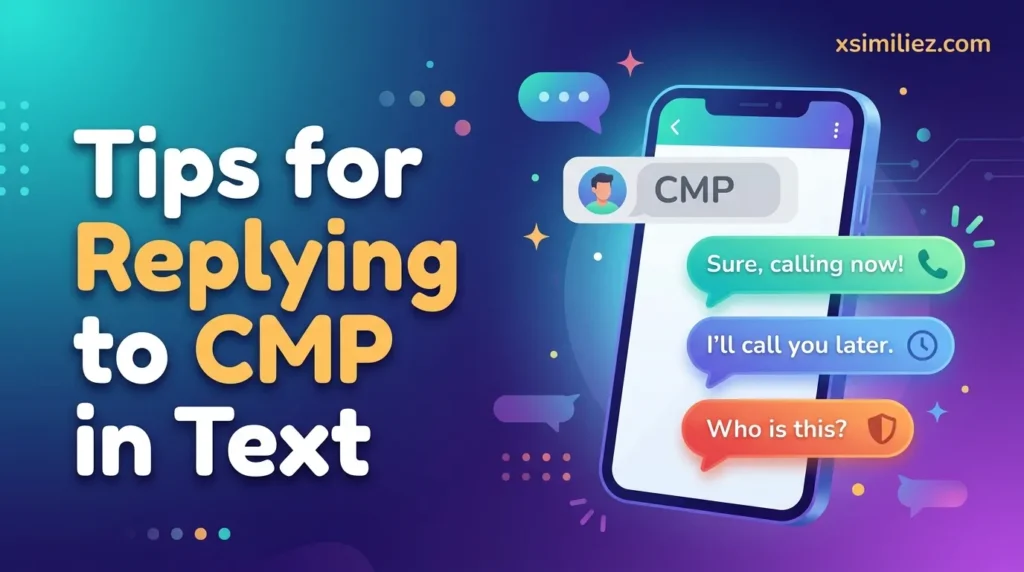
Now that you know what CMP means, here is how to respond in a smart and friendly way. A good reply shows care and saves time for both of you.
Start by checking the sender. If it is someone close, call as soon as you can. If you cannot call, send a short note like “In a meeting, call you at 4.” This lets them know you saw the message.
Next, look at the tone. Words like “urgent,” “asap,” or lots of exclamation marks may mean the call is important. A smiley or a casual “when free” suggests there is no rush. You can match your speed to the message.
If you do not know the sender, be careful. Do not call back a number you do not recognize if the message feels strange. Scam messages sometimes try to get you to call unknown numbers. Send a simple question first, such as “Who is this?” You can also check with a trusted friend or family member.
If you are the one sending CMP, add a little detail. “CMP, no rush” or “CMP, it’s good news” keeps the reader calm. Also, think about the time. A late-night CMP can feel scary, so a short reason helps.
Finally, when in doubt, ask. A quick “Do you mean call you?” is never rude. Clear talk beats a wrong guess every time. And if you want to avoid any mix-up, just write the words out in full. It only takes a few seconds, and everyone understands.
FAQs
What does CMP mean in a text from a friend? It almost always means “Call Me Please.” Your friend wants you to phone them when you have a moment.
Is CMP rude? No. The word “please” makes it polite. Still, tone matters, so read the rest of the message and the way your friend usually texts.
Does CMP always mean “Call Me Please”? No. It can also mean “Current Market Price” in stock talk or “Comprehensive Metabolic Panel” in health settings. The topic of the chat tells you which one fits.
Is CMP the same as CMB? They are close but not the same. CMP means “Call Me Please,” while CMB means “Call Me Back.” People often use CMB after a missed call.
Should I call right away when I get CMP? It depends. If the sender uses words like “urgent” or “asap,” call soon. If not, call when you are free, or reply that you will call later.
Can I use CMP in a work email? It is best to avoid it. CMP is casual slang, so write “Please call me” in full sentences when you message coworkers, teachers, or customers.
Conclusion
The cmp meaning in text is usually “Call Me Please,” a short and polite way to ask for a phone call. It saves time, sounds friendly, and works well between people who know each other. Other meanings exist in money, health, work, and tech, so the setting always matters.
The key lesson is to read the clues. Look at who sent it, what the chat is about, and what tone they used. If the message still feels unclear, a quick question clears things up fast. That small step can save you from a missed call or a silly mix-up.
Next time you see CMP on your screen, you will know just what to do. Reply kindly, call back when you can, and write the full words when you want to be extra clear. With these simple habits, short texts will never confuse you again.

Hi, I’m Harper Blake, and I write for Xsimiliez.com. I enjoy sharing clear and friendly simile examples that students and beginners can understand easily. My goal is to make English learning simple and enjoyable.